


Persistent Neck Pain: Why It Happens and How Specialists Can Help
 John Coury, D.O
November 21, 2025
John Coury, D.O
November 21, 2025
Have you noticed stiffness or a dull ache in your neck that just won’t go away? It often starts subtly, such as discomfort after sleeping in an awkward position or after a long day at the desk. At first, it’s easy to ignore, thinking it will disappear on its own. But over time, even simple movements like turning your head, lifting your child, or driving can trigger pain.
We’ve seen countless patients who waited weeks or months before seeking help, only to realize that early evaluation could have prevented prolonged discomfort and helped restore mobility sooner.
In this blog, we’ll talk about what causes neck pain, the exercises that can help, and the professional treatments that can provide lasting relief, so you know when and how to seek specialist care.
The Real Reasons Behind Your Neck Pain
Some of the most common contributors include:
- Posture and lifestyle habits: Long hours hunched over computers, leaning over a desk, or constantly looking down at a smartphone strain muscles, ligaments, and joints. Even small habits, like cradling a phone between your shoulder and ear, can create tension that builds over months or years. Poor posture at work or during sleep can silently worsen neck pain over time.
- Previous injuries, such as falls, minor accidents, or whiplash from car collisions, can leave lingering misalignment or muscle tension. Many patients don’t realize that even a minor injury from years ago can contribute to current discomfort.
- Age-related changes: As discs lose hydration and joints stiffen with age, early signs of arthritis or cervical degeneration make the spine more vulnerable. These changes reduce resilience, making the neck more prone to injury or chronic discomfort.
- Nerve involvement: Pressure on nerves from a disc or bone spur can cause sharp, radiating pain that travels into the shoulders, arms, or hands. Patients may also notice numbness, tingling, or weakness, which are signs that require professional assessment.
- Stress and muscle tension: Chronic stress often causes unconscious tightening of neck and shoulder muscles, which can worsen discomfort. Over time, this tension can become habitual, creating a cycle where stress and pain feed each other.
What Exercises Actually Help With Persistent Neck Pain?
You might ask, “Are there exercises I can safely do to ease my neck pain?” In our experience, safe, targeted movements can significantly reduce stiffness and support recovery. Some of the most effective exercises include:
- Chin tucks: Strengthen deep neck muscles that stabilize the cervical spine and improve posture. This simple movement can counteract slouching and relieve tension in the front and back of the neck.
- Side bends and rotations: Gently stretch the neck in different directions to release tension and improve flexibility. We often recommend slow, controlled movements rather than rapid rotations to prevent strain.
- Shoulder blade squeezes: Engage the upper back muscles to counteract slouching and promote proper alignment, which helps support the neck and shoulders.
We often notice that without proper guidance, exercises can sometimes exacerbate neck discomfort. Performing these exercises as part of a personalized plan ensures they support recovery while addressing the root cause of discomfort. Patients who follow guided exercises consistently often notice improvements in mobility, posture, and day-to-day comfort.
When Should You See a Specialist?
If your neck pain sticks around, spreads into your arms, or comes with numbness, tingling, weakness, a pattern often associated with cervical radiculopathy it’s a signal that something more than everyday stiffness could be going on. Even sudden pain after a minor injury or flare-up deserves a closer look.
Getting evaluated early gives specialists a chance to figure out what’s really causing the problem. We can recommend the right treatment and help prevent things from becoming chronic. From our experience, patients who act sooner usually notice quicker relief, better mobility, and can get back to their normal activities faster.
Paying attention to these signs and getting help promptly can make a big difference, you’ll not only feel better sooner but also protect yourself from longer-term issues.
What you can Expect from STL Spine Care?
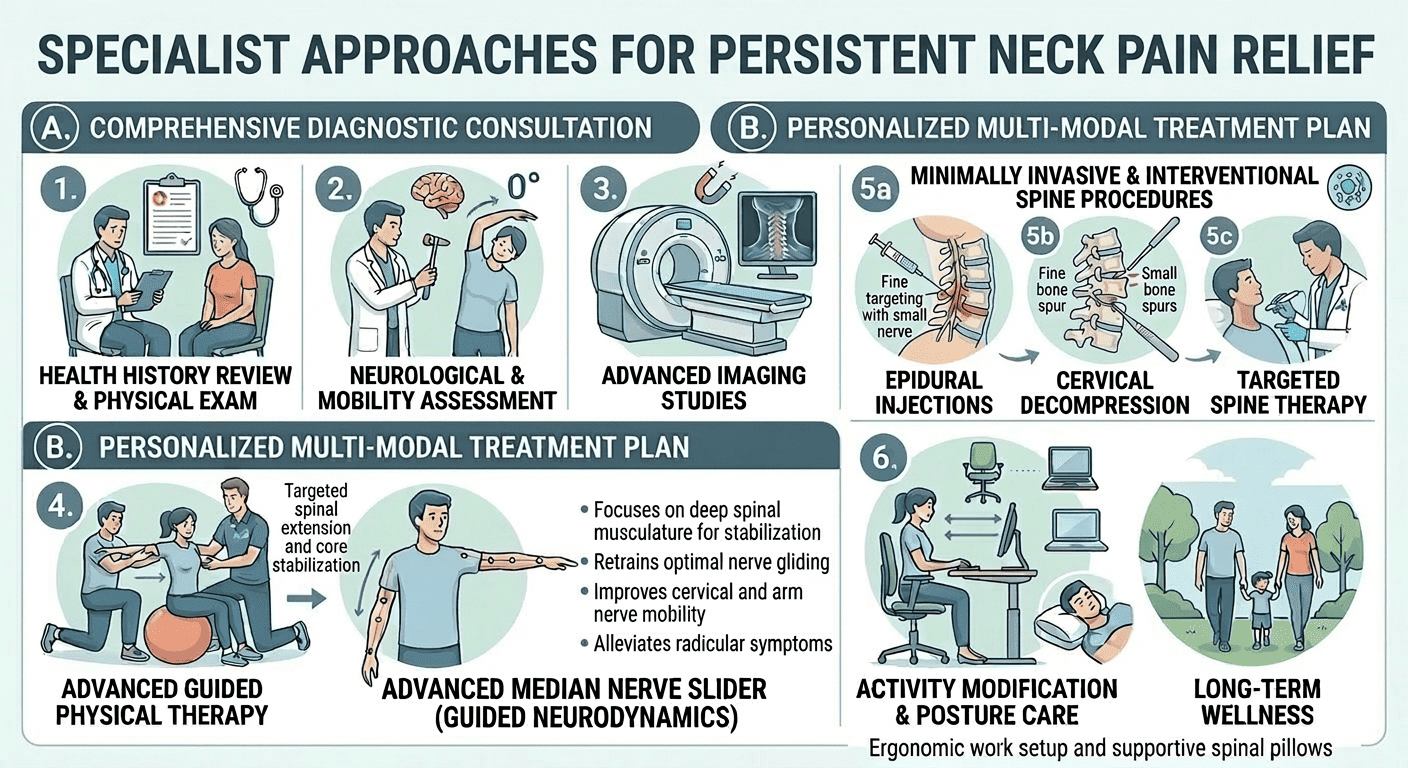
Many patients ask what steps a specialist takes to relieve neck pain. The approach depends on the specific cause and individual needs.
Some patients respond well to conservative care, such as physical therapy, posture correction strategies, targeted injections, and activity modifications. Others may require minimally invasive procedures to relieve nerve pressure or correct structural alignment. In certain cases, surgical interventions are recommended for lasting relief when conservative measures are insufficient.
At STL Spine Care we’ve seen patients who struggled for months regain their quality of life once their treatment addressed the underlying source of pain rather than only managing symptoms.
Take Control of Your Neck Pain
You know that feeling when your neck stiffness lingers day after day, making simple movements uncomfortable? Maybe turning your head while driving or sitting at your desk starts to feel like a challenge. Over time, persistent discomfort can affect not just your body, but your focus, mood, and daily routine.
Whatever the path, timely professional care can make a real difference in reducing discomfort, restoring mobility, and helping you get back to your daily life. If you’re from St. Louis and looking for expert neck pain treatment, at STL Spine Care we’re here to help you take that first step toward a specialist consultation, which could be the key to lasting relief.
Frequently Asked Questions
Why does my neck pain keep coming back even after it feels better?
Recurring neck pain usually means the underlying cause – a disc issue, joint stiffness, or postural habit – was never fully addressed, only the symptoms were. Without treating the root problem, the symptoms are more likely to return.
Can neck pain cause headaches and fatigue, or is that something else?
Yes. Tension and compression in the upper cervical spine frequently refer pain into the base of the skull, causing headaches. Persistent pain can also contribute to fatigue by disrupting sleep and causing your muscles to work harder throughout the day.
Is it safe to just live with neck pain if it's not that severe?
Mild, intermittent discomfort is common and often manageable. But consistently ignoring it allows the muscles, joints, and discs to compensate in ways that can worsen the underlying problem over time
How do I know if my neck pain is coming from a muscle or something deeper like a disc or nerve?
Muscle pain is usually localized, aches after activity, and improves with rest. Disc or nerve involvement typically produces radiating pain, weakness, numbness, or tingling into the shoulder or arm. If you’re experiencing those radiating symptoms, it’s no longer just muscular.
Will I need surgery for persistent neck pain?
The majority of persistent neck pain cases resolve with non-surgical care – physical therapy, targeted injections, or activity modification. Surgery is considered only when conservative treatment fails or when there is clear structural compression causing neurological symptoms.