

L5-S1 Disc Herniation: Symptoms, MRI Findings & Treatment
 John Coury, D.O
November 12, 2026
Lower back pain that travels into the buttock, calf, or foot can make everyday activities uncomfortable. When the pain is accompanied by tingling, numbness, or weakness, irritation of a spinal nerve may be one possible cause.
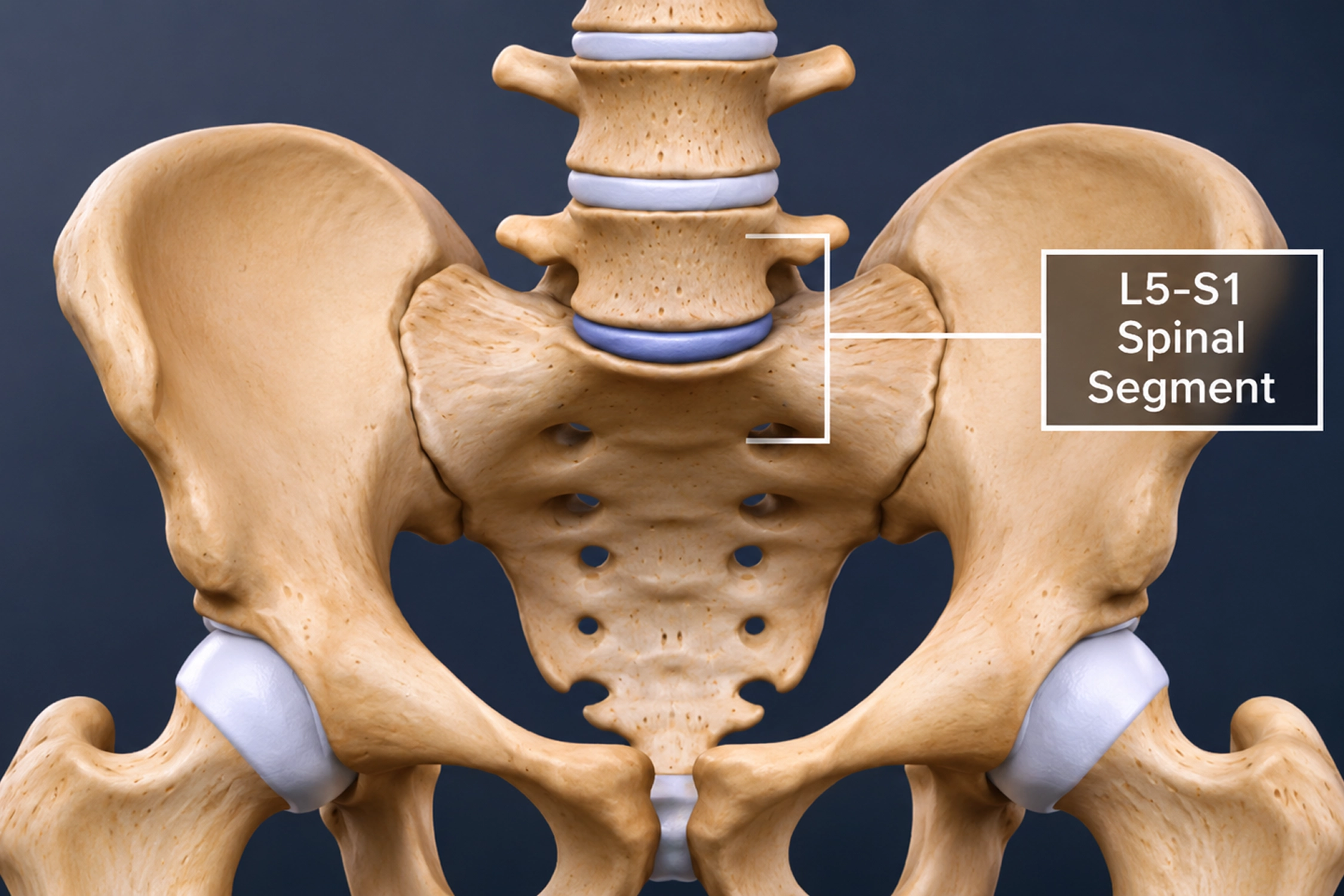
An L5-S1 disc herniation occurs when material from the disc between the fifth lumbar vertebra and the first sacral vertebra extends beyond its normal boundary. Depending on its location, the herniation may irritate or compress a nearby nerve root, producing symptoms in the lower back or leg.
Understanding the symptoms, MRI findings, and available treatment options can help you have a more informed conversation with a spine specialist. Here’s what to know about L5-S1 disc herniation and when to seek medical evaluation.
What Is an L5-S1 Disc Herniation?
An L5-S1 herniation means the cushioning disc between your fifth lumbar vertebra (L5) and the first bone of your sacrum (S1) has torn or pushed outward. This is where your lower spine meets your pelvis, and it takes on heavy load every time you bend, lift, or twist. When the soft inner gel pushes through the disc’s tougher outer wall, it can irritate the nearby nerve. That sends pain, numbness, or tingling through the buttock, back of the thigh, calf, and foot. Pain that travels below the knee is commonly called sciatica, and the broader pattern is known as lumbar radiculopathy.
Common Causes for an L5-S1 Disc Herniation
An L5-S1 disc herniation does not always result from a single injury. Disc changes can develop gradually with age, while lifting, twisting, or other physical strain may contribute to a herniation in some cases. Often, there is no single identifiable cause. Factors associated with increased risk include:
- Age-related changes: Spinal discs can lose water content and flexibility as people age, making them more susceptible to damage over time.
- Repetitive bending and twisting: Physically demanding activities involving repeated bending, twisting, or lifting may contribute to disc stress and increase the risk of injury.
- Prolonged sitting and posture: Extended periods of sitting, particularly in positions that aggravate symptoms, may increase discomfort in some people. However, sitting posture alone does not establish the cause of a disc herniation.
- Heavy lifting: Lifting heavy objects, especially when combined with twisting or sudden movements under load, may contribute to disc injury. However, a herniation can occur even without a specific lifting incident.
- Excess body weight: Higher body weight may increase mechanical stress on the lower spine and contribute to the overall risk of disc problems.
- Injury or trauma: Falls, sports injuries, and accidents may contribute to disc damage, depending on the force and nature of the injury.
- Genetics: Genetic factors may influence disc structure and how susceptible a person is to age-related degeneration or herniation.
L5-S1 Herniation Symptoms and MRI Findings
Symptoms: From Your Lower Back to Your Foot
Symptoms may develop gradually or begin suddenly. A tight lower back can turn, over days or weeks, into leg pain or a numb foot. Because the S1 nerve supplies specific areas of the leg and foot, symptoms follow a recognizable pattern:
- Low back pain: Dull, achy, or sharp near the belt line, often worse with bending, coughing, sneezing, or prolonged sitting.
- Pain down the back of the leg: From the buttock through the thigh and calf, sometimes to the heel or outer foot.
- Numbness or tingling: In the heel, sole, or outer foot, often when sitting or lying still.
- Calf and foot weakness: Rising onto your toes or pushing off while walking may feel weaker on one side.
Red Flags: When Not to Wait
Although many symptomatic disc herniations improve without surgery, certain symptoms require prompt assessment.
Seek emergency medical care immediately if you experience:
- New numbness around the groin, genitals, or inner thighs (saddle-area numbness).
- New loss of bladder or bowel control, or difficulty urinating.
- Rapidly worsening or significant weakness in the leg or foot.
These symptoms can indicate serious nerve compression, including cauda equina syndrome, which requires urgent evaluation. Do not wait for a routine appointment if they occur.
What Does an L5-S1 Disc Herniation MRI Show?
MRI can provide detailed images of spinal discs, nerve roots, and surrounding soft tissues. When imaging is clinically indicated, it can help a specialist assess the location and extent of a suspected disc herniation.
A specialist may review the following findings:
- Herniation type: Whether disc material is protruding, extruding, or has separated as a free fragment.
- Location: Whether the herniation is central, paracentral, or located toward a nerve’s exit opening.
- Nerve root involvement: Whether the herniation contacts, displaces, or compresses a nearby nerve root.
- Spinal canal and nerve openings: Whether there is narrowing that may contribute to nerve compression.
- Other disc changes: Such as reduced disc height, dehydration, or associated degenerative changes.
How L5-S1 Herniations Are Treated
Most L5-S1 herniations improve without surgery. The goals are to calm the irritated nerve, reduce pain, and get you moving comfortably again.
Nonsurgical Treatment
- Rest and activity modification: Temporarily modify activities that aggravate symptoms while maintaining gentle movement as tolerated. Prolonged bed rest is generally discouraged.
- Physical therapy: A physical therapist can tailor exercises and movement strategies to your symptoms, strength, and functional goals.
- Medications: A clinician may discuss medication options based on your symptoms, medical history, and potential side effects. Avoid implying that all patients need anti-inflammatory or nerve-pain medication.
- Heat and ice: Heat or cold may provide temporary comfort for some people. Choose the option that feels helpful and protects the skin.
- Epidural steroid injection: For selected patients with acute, severe sciatica, an epidural injection may be considered to provide short-term symptom relief.
When Surgery May Be Considered
Surgery is usually discussed only if leg pain or weakness hasn’t improved after weeks to months of nonsurgical care, symptoms interfere with daily life, or there is significant nerve compression, progressive weakness, or signs of cauda equina syndrome (an emergency). Options include:
- Microdiscectomy: Removes the part of the disc pressing on the nerve through a small incision.
- Endoscopic discectomy: A minimally invasive approach using a small camera and instruments.
- Disc replacement or fusion: Reserved for select cases of badly damaged discs or an unstable spine.
Conclusion
An L5-S1 disc herniation is a manageable condition with many people improving with nonsurgical care, although recovery varies. Most individuals experience substantial relief through conservative treatments such as physical therapy, targeted exercises, and anti-inflammatory medications. While surgical intervention is rarely required, remaining attentive to warning signs like progressive nerve weakness or severe numbness ensures timely care and helps protect long-term spine health and mobility.
If you’re seeking L5-S1 herniation care in the St. Louis area, Dr. John Coury and the STL Spine Care team offer evaluations and herniated disc treatment options matched to the location and severity of your condition.
Frequently Asked Questions
How long does it take to recover from an L5-S1 herniation without surgery?
Many people begin to experience symptom improvement over several weeks, although recovery varies. Persistent pain, worsening symptoms, or weakness should be assessed by a healthcare professional.
Can I continue working out or lifting weights with an L5-S1 herniation?
What is the best sleeping position for L5-S1 pain relief?
Will an L5-S1 disc herniation heal completely on its own?
Symptoms often improve without surgery, and some herniated disc material can shrink through a process called resorption. However, symptom improvement does not necessarily mean the disc has returned to its original condition.