

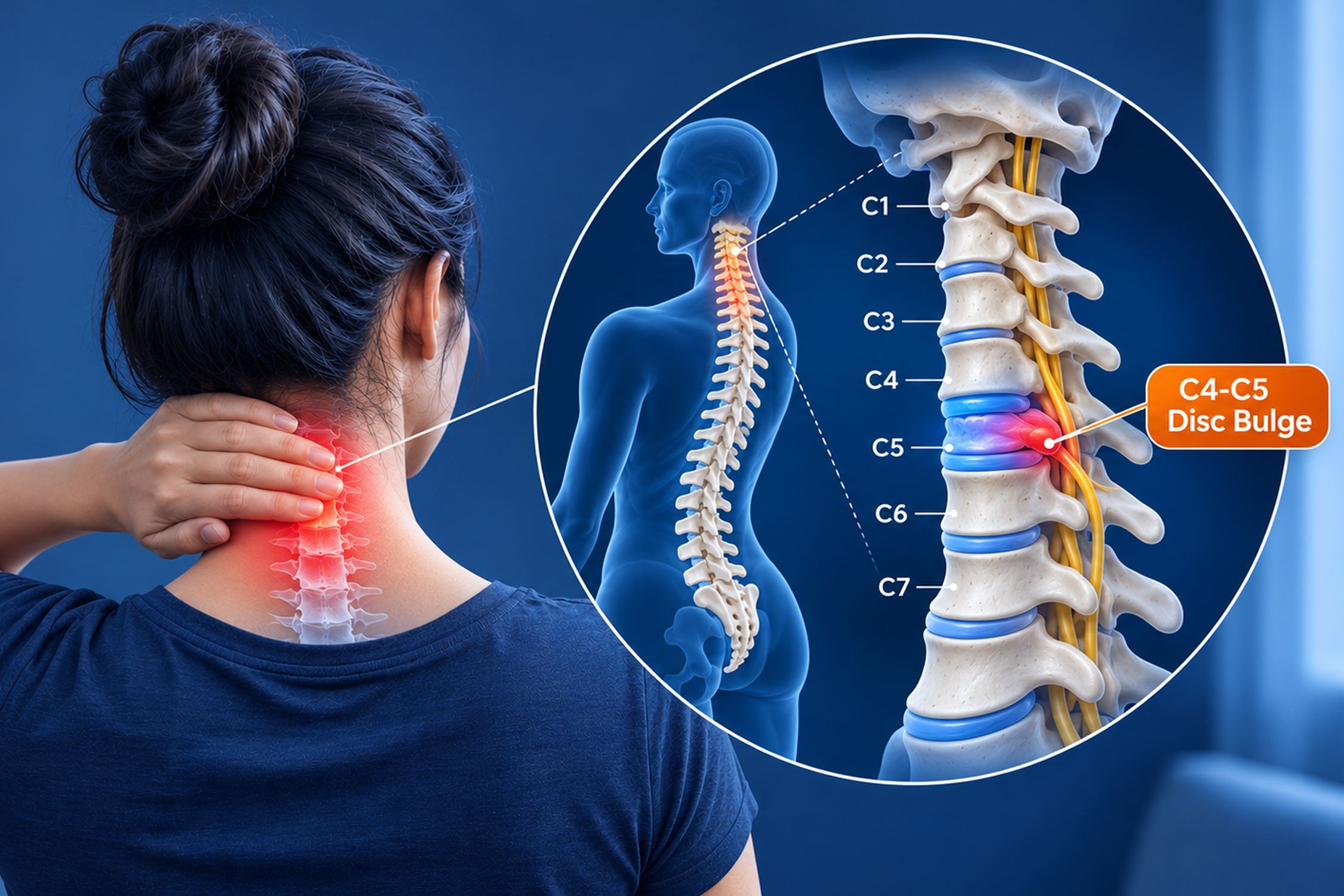
C4-C5 Disc Bulge: Symptoms, Causes, and Treatment Options
 John Coury, D.O
November 19, 2026
Neck stiffness or pain that spreads into the shoulder and arm can make everyday activities uncomfortable. In some cases, these symptoms are associated with changes in the cervical discs, including a disc bulge at the C4-C5 level.
The C4-C5 disc sits between the fourth and fifth vertebrae of the cervical spine. When a bulge irritates or compresses a nearby nerve root, it may contribute to symptoms such as shoulder pain, arm discomfort, tingling, numbness, or muscle weakness. However, not every disc bulge causes symptoms, and the location of a finding on an MRI does not automatically explain a person’s pain.
Understanding the possible causes, symptoms, diagnostic process, and treatment options can help you make informed decisions with a healthcare professional. Here’s what to know about C4-C5 disc bulges and when to seek medical evaluation.
What Is a C4-C5 Disc Bulge?
Your neck has seven small vertebrae, and between each pair sits a soft, cushion-like disc. The C4-C5 disc is the one between the fourth and fifth vertebrae, about halfway down your neck.
Over time, or after an injury, the tough outer layer of this disc can weaken, and part of the disc starts pushing out beyond where it should sit. Think of a car tire with a weak spot in the sidewall that bulges out under pressure. On its own, a bulge often causes no trouble at all. But if it presses on the nearby C5 nerve, you may feel it in your neck, your shoulder, or down into your upper arm.
Disc Bulge vs. Herniated Disc
People often use these terms interchangeably, but they aren’t quite the same. With a bulge, the disc’s outer layer stays intact and a wider section of the disc pushes outward. With a herniation, that outer layer actually tears, and some of the soft inner material leaks through. If you want to understand the differences in symptoms, causes, and treatment, learn more about bulging disc vs. herniated disc.
Either one can irritate a nerve and cause similar symptoms. The good news is that most people with either condition get better without needing surgery.
What Causes a C4-C5 Disc Bulge?
A disc bulges when its tough outer ring weakens, allowing the inner gel-like center to push outward into the spinal canal. Several factors may contribute to disc changes or injury.
Factors that may contribute to cervical disc changes include:
- Age-related disc degeneration: Cervical discs can lose water content and flexibility over time. These changes may reduce disc height and make the discs more susceptible to degeneration.
- Injury or trauma: A sudden impact, such as a fall or motor vehicle accident, may damage structures in the neck. Whether a disc is affected depends on the nature and severity of the injury.
- Repeated physical strain: Activities involving repeated lifting, twisting, or prolonged neck positioning may contribute to discomfort or physical strain. However, these activities do not establish the cause of an individual disc bulge.
Risk Factors That Contribute to Disc Damage
- Poor Posture (“Tech Neck”): Hours spent looking down at phones or hunching over laptops. These prolonged positions may aggravate discomfort, while posture alone cannot establish the cause.
- Smoking: Nicotine and tobacco toxins constrict small blood vessels, restricting nutrient supply and oxygen to spinal discs. This accelerates disc dehydration, impairs tissue repair, and speeds up premature breakdown.
- Sedentary Lifestyle: Physical inactivity reduces muscle support around your neck and upper back while impairing the natural fluid exchange (imbibition) that keeps discs hydrated and resilient.
- Genetics: Family history plays a role in the strength of your collagen structures, making some individuals naturally predisposed to earlier disc degeneration.
C4-C5 Disc Bulge Symptoms
A C4-C5 disc bulge may cause no symptoms at all. When nearby nerves are irritated or compressed, symptoms depend on which structures are affected and how severely they are involved.
Possible symptoms include:
- Neck pain or stiffness: Discomfort around the neck that may become more noticeable with certain movements.
- Shoulder pain: Pain may extend toward the shoulder or the area around the shoulder blade.
- Pain that travels into the arm: If the C5 nerve root is affected, symptoms may extend toward the outer shoulder and upper arm. Similar symptoms can occur with other cervical disc conditions, such as a C5-C6 disc herniation, depending on which nerve is affected.
- Tingling or numbness: Some people experience altered sensation in the shoulder or arm.
- Muscle weakness: Nerve involvement may affect shoulder movement, including lifting the arm to the side.
These symptoms are not specific to a C4-C5 disc bulge and can occur with other neck, shoulder, or nerve conditions. A clinical examination helps determine whether the symptoms fit a cervical nerve problem.
Diagnostic Tests and Evaluation for C4-C5 Disc Bulges
Evaluating a suspected C4-C5 disc bulge involves reviewing symptoms, performing a physical and neurological examination, and deciding whether imaging or other tests are needed. The appropriate tests depend on the symptoms, their duration, examination findings, and whether a more serious condition is suspected.
- Physical and neurological examination: A healthcare professional may assess neck movement, shoulder and arm strength, sensation, reflexes, and symptoms that occur with particular movements. The findings help determine whether a nerve root or the spinal cord may be involved.
- Cervical spine MRI: MRI provides detailed images of discs, nerve roots, the spinal cord, and surrounding soft tissues. It may help identify a disc bulge or other changes when imaging is clinically indicated. The findings must be interpreted alongside the symptoms and examination.
- X-rays: X-rays can show spinal alignment, bone changes, and disc-space narrowing. They do not show disc tissue or nerve roots in the same detail as an MRI.
- CT scan: CT provides detailed views of the bones and may be useful when bone spurs or other bony changes need assessment, or when MRI is unsuitable.
- Electromyography (EMG) and nerve conduction studies: These tests may help distinguish a cervical nerve-root problem from certain peripheral nerve conditions when the diagnosis remains unclear. They are not required for every disc bulge and may not identify every case of nerve-root irritation.
MRI can help doctors get a clearer picture of the cervical discs, nearby nerves, and spinal cord. However, finding a disc bulge on an MRI does not always mean it is the cause of the pain. Doctors also consider a person’s symptoms and physical examination before deciding whether the finding is related to their condition.
Treatment Options for a C4-C5 Disc Bulge
For many patients without urgent neurological problems, treatment begins with nonsurgical care. The primary goals are to calm nerve irritation, reduce inflammation, and improve neck mobility and function. Understanding the differences between non-surgical and surgical spine treatments can also help patients discuss appropriate options with their healthcare provider.
Initial Conservative Care
- Activity modification: Temporarily adjust activities that aggravate symptoms while maintaining gentle movement as tolerated. Avoid prolonged inactivity unless a healthcare professional advises otherwise.
- Physical therapy: A physical therapist can recommend appropriate exercises to improve neck mobility, strength, and tolerance for daily activities. Exercises should be tailored to the person’s symptoms and should not worsen neurological symptoms.
- Medications: Depending on medical history and symptoms, a clinician may recommend or prescribe medication for pain or muscle spasm. Benefits, risks, and possible side effects should be considered before use.
- Heat or cold therapy: Applying heat or cold may provide temporary comfort for some people. Use a protective layer to avoid skin injury.
Ergonomic adjustments: Adjusting screen height, taking movement breaks, and setting up a comfortable workstation may help reduce aggravation during desk work. These adjustments can support comfort but do not reverse a disc bulge.
Additional Nonsurgical Options
- Cervical traction: In selected cases, a healthcare professional may consider traction as part of a broader treatment plan, particularly for cervical radiculopathy. It is not suitable for everyone and should be guided by a qualified professional.
- Soft cervical collar: A collar may be recommended for limited, short-term use in specific circumstances. Prolonged or unsupervised use is not appropriate for everyone.
- Cervical epidural steroid injection: An injection may be considered for selected patients with persistent or severe nerve-related pain. The potential benefits, risks, and expected duration of relief should be discussed with the treating clinician.
Conclusion
Living with constant neck and shoulder discomfort can feel overwhelming, but a C4-C5 disc bulge is a highly manageable condition with many people improving with appropriate care, although recovery varies. By addressing the root cause early, restoring healthy spinal mechanics, and giving your nerves the space they need to heal, you can protect your long-term neck health and return to your daily routine without hesitation.
If upper body pain, numbness, or weakness is keeping you from living comfortably in the St. Louis area, Dr. John Coury and the STL Spine Care team are here to help, from a thorough evaluation to cervical radiculopathy treatment when a pinched nerve is behind your symptoms. Contact us today to schedule your comprehensive evaluation on the first step toward lasting relief.
Frequently Asked Questions
Can a C4-C5 disc bulge cause headaches or dizziness?
A C4-C5 disc bulge may be present in someone experiencing neck-related headaches, but it does not necessarily mean the disc bulge is causing them. Dizziness can also occur for several reasons and is not a typical symptom of this condition. If headaches or dizziness continue or occur without a clear reason, it’s best to consult a healthcare professional.
What is the safest sleeping position for a C4-C5 disc bulge?
Sleep on your back using a contoured cervical pillow to keep your neck neutral. Side sleeping is also safe with proper pillow support, but avoid sleeping on your stomach, which twists and compresses cervical nerves.
How long does a C4-C5 disc bulge take to heal without surgery?
Recovery time can vary depending on the severity of the condition and how a person responds to treatment. Many people with cervical radiculopathy start feeling better within a few weeks, although recovery can take several months in some cases. Some symptoms may also take longer to settle, even with appropriate nonsurgical care.
What movements should I avoid with a C4-C5 disc bulge?
How do I know if my C4-C5 disc bulge is compressing my spinal cord?
When should you see a doctor for a C4-C5 disc bulge?
If neck pain continues or starts spreading into the shoulder or arm, it’s worth getting it checked. You should also seek medical advice if you notice tingling, numbness, or weakness. Symptoms such as difficulty walking, poor balance, trouble with hand coordination, or worsening weakness need prompt medical attention.
Is a C4-C5 disc bulge serious?
Not necessarily. Some people have a C4-C5 disc bulge without experiencing any symptoms. In other cases, it may put pressure on a nearby nerve, leading to neck pain, shoulder discomfort, numbness, tingling, or weakness. How serious it is depends on the extent of the disc changes and whether nearby nerves or the spinal cord are affected.