

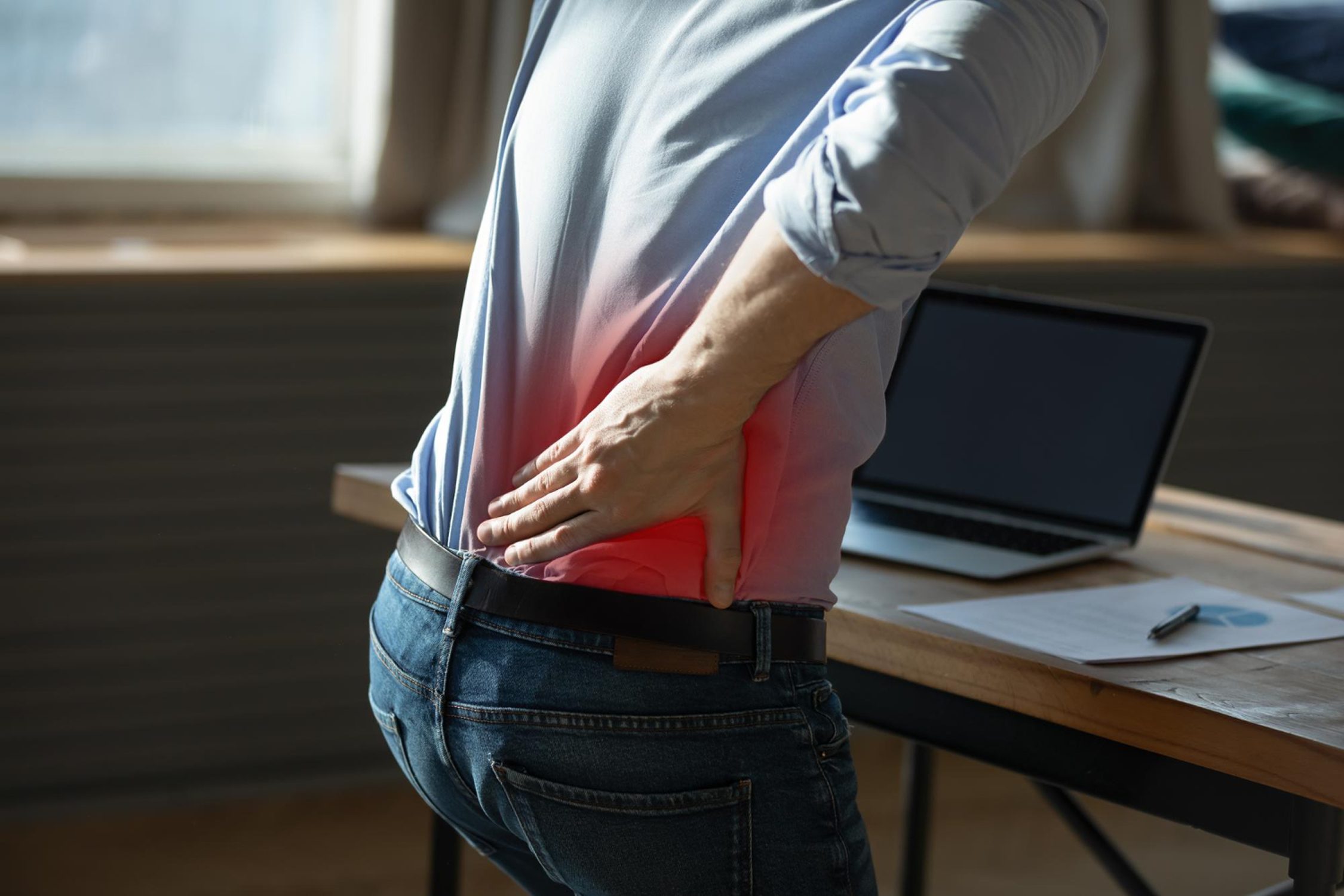
Lower Back Pain When Standing: Causes and Treatments
 John Coury, D.O
October 5, 2026
John Coury, D.O
October 5, 2026
If your lower back starts aching the moment you’re on your feet, you’re not imagining it and you’re far from alone. Whether it happens at the kitchen counter, during a long grocery run, or halfway through a work shift, pain that shows up specifically when standing often points to something different than pain that flares with sitting or bending. Understanding what may be causing the pain can help determine the right approach to treatment.
Why Standing Puts Extra Stress on Your Lower Back
When you stand, your lumbar spine takes on the job of supporting your upper body’s full weight against gravity, without the help of a chair or backrest. Your core muscles, hip flexors, and the small stabilizing muscles along your spine all have to work together to keep you upright. If these muscles aren’t providing adequate support, remaining upright for long periods can become uncomfortable or painful.
Common Causes of Lower Back Pain When Standing
Poor posture: Standing with your pelvis tilted forward, shoulders slumped, or weight shifted unevenly onto one leg increases pressure on the lumbar spine and surrounding muscles.
Weak core and glute muscles: Your abdominal and gluteal muscles help stabilize the pelvis and contribute to stability during standing and movement.
Muscle fatigue and spasm: Standing still for long stretches rather than walking, can cause the muscles around the spine to tighten and fatigue, leading to a dull, aching pain that builds over time.
Degenerative disc disease: As spinal discs lose hydration and height with age, they provide less cushioning between vertebrae, which can make standing upright more uncomfortable.
Spinal stenosis: A narrowing of the spinal canal can put pressure on nerves when the spine is extended, such as during standing. Pain from stenosis often eases when leaning forward or sitting down.
Facet joint arthritis: The small joints connecting each vertebra can become inflamed or arthritic, causing pain that worsens with standing and spinal extension.
Herniated or bulging disc: A disc pressing on a nearby nerve root can cause standing-related pain that radiates into the buttock or leg, sometimes accompanied by numbness or tingling (sciatica).
Spondylolisthesis: When one vertebra slips forward over the one below it, it can cause instability and pain that’s often worse with standing or walking.
Leg-length discrepancy or foot mechanics: Uneven leg length, flat feet, or worn-out footwear can throw off pelvic alignment, placing unevens: train on the lower back during standing.
Excess weight on pregnancy: The added weight and shift in the body’s center of gravity during pregnancy can increase the load on the lower back and contribute to discomfort.
Prolonged sitting beforehand: Long periods of sitting can leave some people feeling stiff when they stand, particularly after remaining in one position for an extended period.
When Standing Pain Might Signal Something More Serious
Certain symptoms accompanying standing-related back pain warrant prompt medical evaluation. However, you should see a spine specialist promptly if you experience:
- Pain radiating down one or both legs, especially past the knee
- Numbness, tingling, or weakness in the legs or feet
- Pain that improves with rest but never fully resolves
- Loss of bladder or bowel control
- Back pain following a fall, accident, or injury
Common Mistakes That Make Standing Pain Worse
It’s easy to assume that standing for too long is the only reason your back hurts. But the way you stand, move, and distribute your weight can also contribute to discomfort.
- Shifting your weight onto one leg: Standing with weight resting mostly on one hip feels more comfortable in the moment, but it tilts the pelvis and creates a lopsided load on the lower back. Do this for long stretches and the muscles on one side end up compensating constantly.
- Locking your knees: Standing with knees fully extended and locked shifts the body’s weight backward, forcing the lower back to arch more than it should to keep you balanced.
- Letting your stomach lead: When the core relaxes and the belly pushes forward, the pelvis tips and the lower back arches to compensate for a posture called anterior pelvic tilt that puts extra pressure directly on the lumbar spine.
- Standing flat-footed on hard surfaces without moving: Staying completely still, even with “good” posture, cuts off blood flow and increases spinal disc pressure. Stillness is often worse than the standing itself.
- Crossing your legs or ankles: Common while standing and chatting or waiting in line. This shifts the base of support and throws off alignment through the hips and lower back.
- Wearing the wrong shoes for the surface: Unsupportive footwear may affect how weight and impact are distributed through the feet and legs, which can contribute to discomfort during prolonged standing.
Treatment Options for Back Pain When Standing
Postural correction: Learning to stand with a neutral pelvis, engaged core, and evenly distributed weight can significantly reduce strain, often with guidance from a physical therapist.
Core and glute strengthening: Targeted exercises that build strength in the deep abdominal muscles, glutes, and hip stabilizers can improve strength and stability around the pelvis and lower back.
Stretching tight muscles: Tight hip flexors and hamstrings can pull the pelvis out of alignment. Regular stretching helps restore balance and ease strain on the low back.
Movement breaks: If you stand for long periods at work, alternating positions, shifting weight, or briefly walking every 20–30 minutes can prevent muscle fatigue from setting in. The same rule applies in reverse, if your job involves long sitting, standing, stretching, or walking for five minutes every hour helps prevent pain before it starts.
Heat and cold therapy: Applying ice can calm inflammation and numb acute pain, while heat helps relax tight muscles and improve blood flow, both are useful, low-cost first steps during a flare-up.
Massage therapy: Massage can relieve muscle tension, improve circulation, and support overall spinal mobility, especially when combined with a strengthening program.
Supportive footwear or orthotics: Supportive footwear or orthotics may be considered when foot mechanics or gait are contributing to discomfort.
Lifting with proper mechanics. Bending at the knees and hips rather than the waist, keeping loads close to your body, and avoiding twisting while lifting all reduce unnecessary strain on the lower back.
Anti-inflammatory medication: Over-the-counter NSAIDs can help manage pain and inflammation during flare-ups, though they aren’t a long-term solution on their own.
Epidural steroid injections: For pain linked to nerve irritation from stenosis or a herniated disc, targeted injections can reduce inflammation and provide meaningful relief.
Bracing: A lumbar support brace may provide temporary support in some situations, but it shouldn’t replace treatment directed at the underlying cause.
Surgical evaluation: When conservative treatments don’t provide relief, particularly for significant stenosis, disc herniation, or structural instability, a spine surgeon can evaluate whether a minimally invasive procedure is appropriate.
Conclusion
You don’t have to push through daily standing pain or rely on constant sitting breaks to get through your day. Because standing pain can stem from anything from muscle fatigue to joint arthritis or disc pressure, finding true relief starts with identifying the exact underlying cause.
Taking the time to get an accurate diagnosis allows you to stop guessing with quick fixes and start a targeted treatment plan designed to restore your comfort and mobility.
If you’re looking for answers about your back pain, reach out to STL Spine Care for back pain treatment in St. Louis or contact our team to schedule an evaluation.
Frequently Asked Questions
Why does my back hurt the moment I stand up, but feel fine once I start walking?
Standing still forces your postural muscles to hold one fixed position, which fatigues them quickly. Walking engages those same muscles dynamically and distributes the load, so it’s often more comfortable.
How long should I try self-care before seeing a specialist?
Can a lumbar support belt fix the problem long-term?
Is it better to sit or lay down when my lower back hurts from standing?
Lying flat on your back with a pillow under your knees is generally better than sitting, as it fully takes weight off the lumbar spine. Sitting still puts vertical pressure on your lower discs and tightens hip flexors, which can actually worsen standing pain once you get back up.
Can flat feet or high arches cause my back to hurt while standing?
Yes. Poor foot mechanics alter how impact forces travel up your legs and into your hips. Flat feet can cause your ankles to roll inward (overpronation), tilting your pelvis forward and placing extra strain on the lower back muscles during standing.
What daily core exercises are safest to do if standing triggers my back pain?
Low-impact stabilization exercises like the Bird-Dog, Dead Bug, and forearm planks are safest because they strengthen the deep abdominal and back muscles without placing heavy compression or rotational stress on your lumbar spine.