


Will a Herniated Disc Heal on Its Own or Get Worse Over Time?
January 14, 2026Yes, A herniated disc heals on its own heals itself.
But sometimes you have to endure the pain and be more cautious during the healing period. The common concern is whether a herniated disc will get worse over time. While your disc is recovering, certain activities can slow healing or make things worse.
3 Things You Must Avoid During the Recovery:
- Don’t Stay in Bed Too Long
- Don’t Lift, Bend, or Twist
- Don’t Ignore Worsening Symptoms
For most people, a herniated disc heals naturally, without any surgical intervention. Your body has a built-in repair system designed to manage this injury.
In this 3-stage recovery timeline, we’ve highlighted the positive signs to look for, and given you the critical “Red Flag” warnings that mean it’s time to see a doctor immediately.
To understand how your body heals a herniated disc, you first need to visualize what’s actually happening inside your spine. That’s where the ‘Jelly Donut’ Analogy comes in. It’s the simplest way to picture the injury and why healing works the way it does.
What is the Jelly Donut Analogy?
Let’s assume your spinal disc is a jelly donut. The tough outer casing is the annulus fibrosus, and the soft, gel-like center is the nucleus pulposus (the jelly). A herniation is when the jelly pushes out of the casing, pressing on a nearby spinal nerve, which causes you pain.
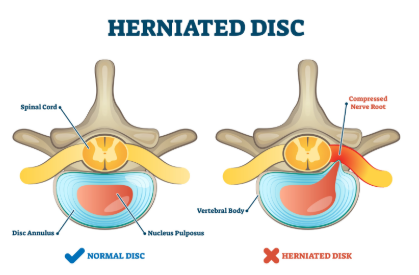
The healing mechanism is a biological clean-up process called resorption. Here’s how it works: when the disc’s gel-like center (the ‘jelly’) leaks out, your immune system recognizes it as foreign material that doesn’t belong there. Specialized cells called macrophages act like your body’s cleanup crew; they break down, absorb, and clear away the herniated material piece by piece. As this happens, the disc fragment shrinks and pulls away from the nerve, which is why most people see their symptoms gradually resolve over weeks and months.
Your Body’s Repair Plan: A 3-Stage Timeline
1. Reducing the Swelling (Weeks 1-2)
This is the acute, most painful phase. The pain is caused by two things: the mechanical pressure of the disc fragment on the nerve, and the massive chemical inflammation that immediately follows the injury.2. The Cleanup Crew (Weeks 2-12)
This is the primary healing phase where the “jelly donut” clean-up (resorption) is actively underway. Pain usually starts to centralize (move from the foot/calf back toward the lower back) and decreases significantly during this time.3. Full Recovery and Strength (Months 3-12)
While the pain is often gone by 3 months, the disc itself continues to strengthen and reorganize its fibrous structure over a longer period.Signs That You Are Healing
As your body progresses through the cleanup stages, you’ll see clear, measurable signs that a herniated disc is healing. Don’t look for a single moment where the pain disappears, but rather a pattern of gradual improvement.
- Centralization of Pain: The most important sign. The sharp pain, tingling, or numbness begins to retreat from your foot or calf/hand, or forearm back toward your lower back or neck. Pain moving toward the spine is a strong indicator of healing.
- Decreased Intensity: The sharp, shooting pain is replaced by a dull ache or stiffness. Pain flares become less frequent and less severe.
- Improved Tolerance to Positions: You can tolerate sitting, standing, or walking for longer periods without an immediate increase in pain.
- Reduced Reliance on Medication: Your need for anti-inflammatory medication or pain relievers naturally decreases.
Warnings: When to See a Doctor FAST
- Loss of Bowel or Bladder Control: Sudden inability to control urination or defecation.
- Saddle Anesthesia: Numbness, loss of feeling, or pins and needles in the area that would touch a saddle (inner thighs, groin, genitals, and rectum).
- Rapidly Progressive Weakness: Sudden and severe loss of muscle strength that makes it impossible to lift your foot (foot drop) or causes difficulty standing or walking.
Experiencing Severe Numbness or Weakness?
STL Spine Care specializes in urgent spine conditions, ensuring timely interventions to protect your mobility and quality of life.
Your Personal Recovery Action Plan (The Key Takeaways)
- Be Patient: Healing takes 4 to 12 weeks (sometimes longer for full strength). You cannot rush the body’s cleanup process.
- Move, Don’t Rest: Avoid prolonged bed rest. Gentle, frequent movement (like walking) is key to pumping nutrients to the disc.
- Avoid Bad Habits: Do not bend forward, twist, or lift anything heavy in the first few weeks. These movements dramatically increase pressure on the disc and can re-injure the area.
- Embrace Physical Therapy: A PT will teach you the proper mechanics to protect your spine for life and strengthen your inner brace.
A herniated disc is undoubtedly painful, so always keep this in mind: your body is designed to heal itself naturally. The process involves three distinct phases, from controlling acute inflammation to the “Cleanup Crew” shrinking the disc fragment, leading ultimately to full strength. Your recovery timeline relies heavily on your commitment to the Personal Recovery Action Plan, moving gently, avoiding twisting and lifting, and embracing physical therapy.
If you’ve passed the 6-week mark, are experiencing worsening pain, or are unsure how to start a safe physical therapy program, it’s time to seek expert guidance. If you’re in the St. Louis area and need a specialist to confirm your diagnosis and guide your herniated disc treatment St. Louis patients trust, including proven non-surgical herniated disc treatment options from an experienced spine surgeon for herniated disc care.
Frequently Asked Questions
Can a herniated disc heal without surgery?
Yes, most herniated discs heal on their own. You can manage symptoms with pain relievers, anti-inflammatory medication, physical therapy, and rest. Surgery is rarely needed.
How long does a herniated disc take to heal?
About 90% of people feel better within 6 weeks. If pain continues beyond that, you may need additional treatments like physical therapy or injections.
What are my surgical options and risks of herniated disc?
Are alternative therapies like epidural injections or acupuncture worth trying for herniated disc?
Epidural steroid injections alleviate pain and aid healing, while spinal decompression (non-surgical) treats herniated discs effectively up to 89% of the time; these are recommended before surgery.
Can herniated disc recur, and how do I prevent it long-term?
Yes, it can recur. Prevent it by staying active with physical therapy exercises, maintaining good posture, avoiding heavy lifting or twisting movements, and following your doctor’s recommendations.