

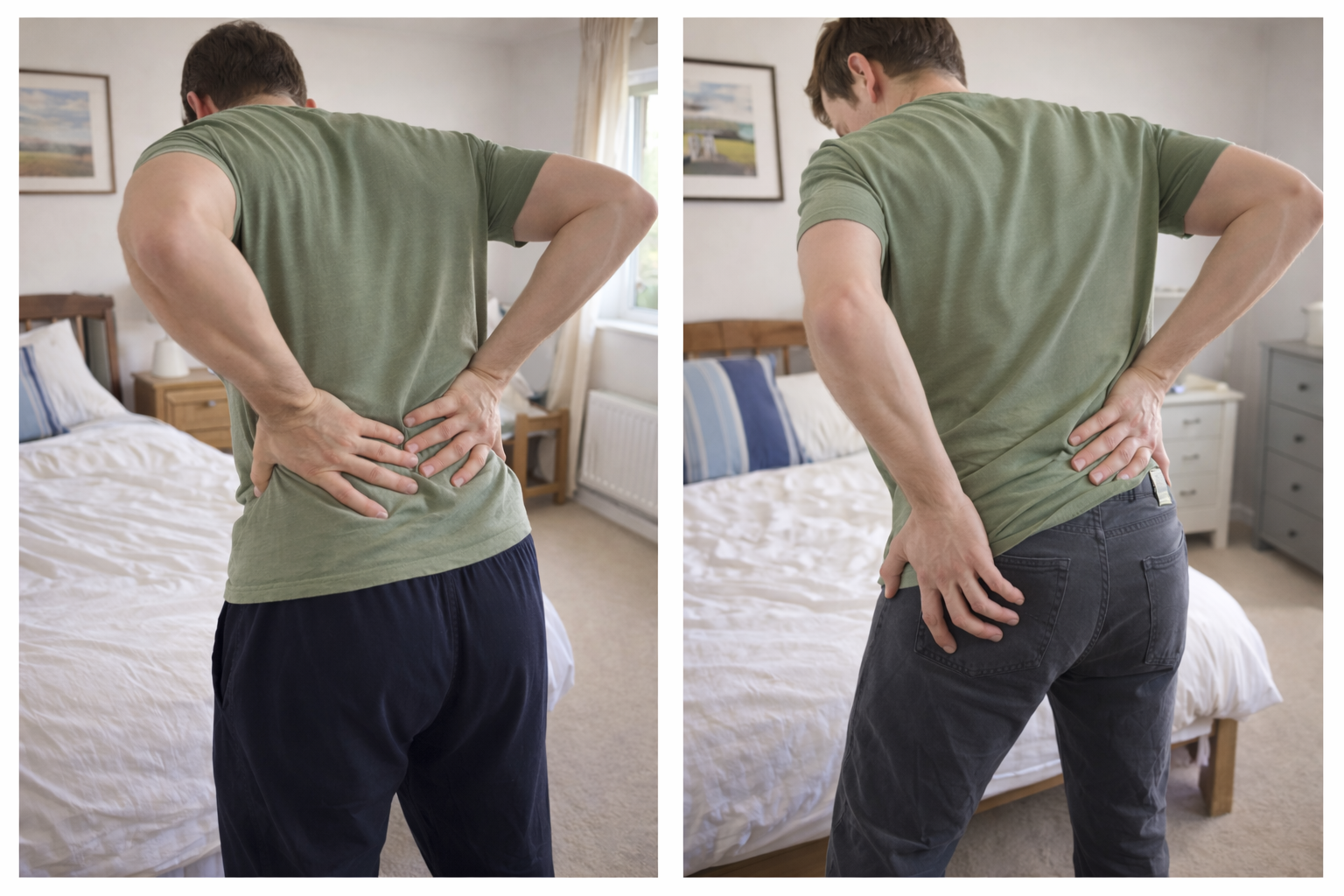
Back Pain vs. Sciatica: How to Tell the Difference and When to Seek Care
February 17, 2026You tell yourself it’s nothing: just a tight back from sitting too long. So you stretch, shift positions, maybe use a pillow for support. But then the discomfort starts showing up at odd times, during a short walk, while driving, even when you’re trying to relax. And when the pain begins to radiate into your hip or leg, it stops feeling like a simple backache.
What you really want is clarity. You want to know if this is temporary, if you’re making it worse by ignoring it, and what actually helps ease the pain. Should you rest more? Move more? Try exercises? See a specialist? The uncertainty is more stressful than the pain itself.
That’s where understanding your symptoms becomes essential. The way you experience pain is different, where it travels, how it feels, and what triggers it give you important clues. But many people mix up ordinary back strain with nerve-related pain.
Let’s look at why these two conditions are so commonly mixed up.
Can back pain turn into sciatica?
Sciatica is a common term used to describe pain that radiates down the leg. When the cause is due to lumbar spine pathology, the diagnosis is referred to as “radiculopathy.” Lower extremity radiculopathy occurs when one or more nerve roots are irritated or compressed, often by issues in the lower spine, like a bulging disc, inflammation, or spinal narrowing.
What may start as general lower back discomfort can develop into radiculopathy if nerve roots are irritated, leading to pain that travels down the leg. Some patients may also experience numbness and tingling, either alone or along with the leg pain. If back pain starts spreading below the knee or feels sharp and electric, it may signal nerve involvement.
Why So Many People Confuse Back Pain and Sciatica
The confusion starts from the proximity of the muscles, joints, discs, and nerves, all of which share the same space in the lower back. When pain starts there, it’s easy to assume every ache has the same cause.
Because the nerve roots that contribute to the sciatic nerve exit the spine in the lower lumbar region, the same area where we carry our weight and strain our muscles, the starting point of the pain feels the same.
The confusion usually happens because:
- Both can start after lifting or long sitting
- Both may limit daily movement
- Both can feel intense enough to interrupt routines
The real difference between back pain and sciatica is in how the pain moves and feels, not just where it begins.
The Path Your Pain Follows Says a Lot
Pain patterns reveal whether you’re dealing with back pain vs. sciatica. Track yours: Does it hover or roam?
Some discomfort stays in one place, like a sore shoulder after a workout. Other pain travels, almost like it’s tracing a line down the body.
Pain That Stays in One Area
Localized pain points to muscle or joint strain. It tends to sit in one spot and react to movement.
You might notice:
- A dull ache or tightness
- Sensitivity to touch in that spot
- Pain after certain movements
Pain That Spreads Down the Leg
Sciatic pain is not subtle. It follows the sciatic nerve from the lower back through the hip and down the leg.
You might notice:
- Lower back pain going down the leg
- Burning or electric sensations
- Numbness in the leg from back pain
- Tingling in the foot or toes
How to Know if Back Pain Is Sciatica
| Aspect | Muscle Back Pain | Sciatica Nerve Pain |
|---|---|---|
| Location | Lower back only | Back to leg/foot, one side |
| Pain Type | Dull ache, throb, or stiffness | Sharp, burning, shooting, pins-and-needles |
| Spread | Stays above the hips | Hits the calf or the foot |
| Nerve Symptoms | Rare | Numbness, weakness in the leg |
| Triggers | Bending forward | Standing or walking |
- Does the pain travel below the knee?
- Is one leg affected more than the other?
- Does sitting make it worse?
- Do coughing or sneezing trigger it?
- Is there tingling or numbness?
Simple Ways to Prevent Back Pain
- Gentle stretches like knee-to-chest or seated spinal twists to loosen tight muscles
- Core-strength exercises, such as bridges or bird-dogs, to support the spine
- Standing and moving every 30–45 minutes, if you sit a lot
- Adjusting chair height so that your feet stay flat and your shoulders relaxed
- Using proper lifting form (bend at hips and knees, not the back)
If pain persists despite these efforts, it may signal something deeper than routine strain. That’s when paying closer attention to symptoms becomes important.
Why an Accurate Diagnosis Matters for Back Pain and Sciatica
Misidentifying your pain leads to wasted time and unnecessary suffering. If you treat sciatica with only muscle relaxants, you are masking the symptom while the structural problem worsens.
Getting the Right Diagnosis Can Save You Months of Pain
Professional spine care focuses on decompression and alignment.
Determining whether back pain is nerve-related or muscle-based through physical exams or imaging allows for a more targeted treatment approach.
For example, sciatica might require specific neural flossing exercises, while muscle strain requires targeted strengthening of the core muscles. An accurate diagnosis makes sure you aren’t stretching a nerve that actually needs stability, or vice versa.
Conclusion
Pain that lingers, spreads, or persists is your body asking for attention. The sooner you understand whether you’re dealing with muscle-related back pain or sciatica nerve irritation, the sooner you can choose the right treatment, whether it’s focused back pain treatment or specific sciatica treatment.
If your symptoms sound familiar, such as lower back pain going down the leg, numbness, or sharp nerve-like pain, it’s time to stop guessing and get clear answers. A proper evaluation can pinpoint the cause and open the door to real relief.
STL Spine Care helps patients in St. Louis find the true source of their pain and receive care tailored to their condition, not just the symptoms. One call could be the step that gets you back to moving comfortably, sleeping better, and living without constant discomfort.
Frequently Asked Questions
How do I know if my pain is sciatica or just back pain?
If your pain travels from the lower back into the hip, buttock, or down the leg, it may be sciatica. Back pain that stays in one area is more often muscle or joint-related. A proper exam is the only way to be sure.
Why does my lower back pain go down my leg?
Pain traveling down the leg often means a nerve is irritated or compressed. This is a key sign of sciatica rather than a simple back strain.