

Top Stretches for Sciatica Pain Relief You Can Do at Home
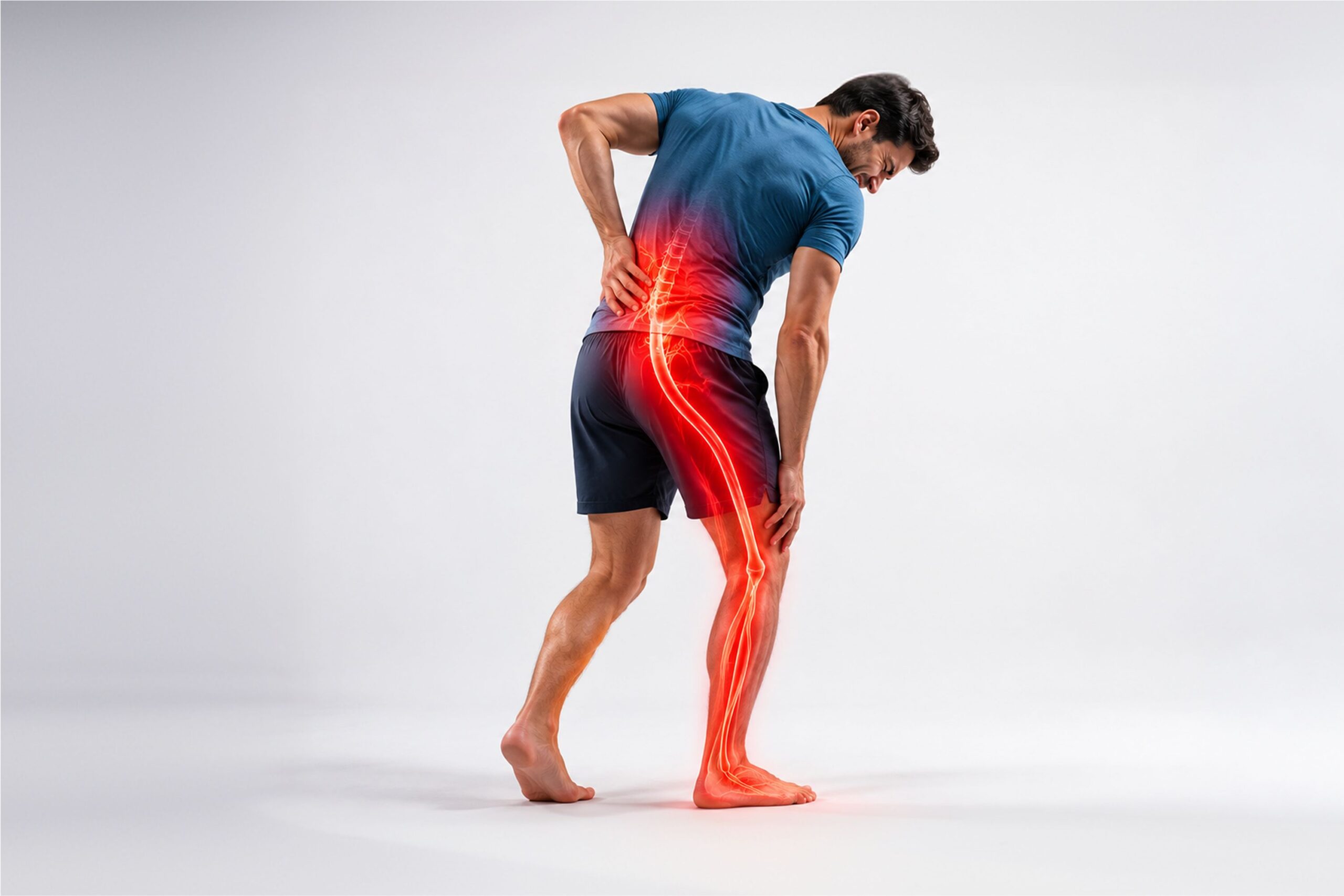
June 12, 2026When you have sciatica, your lower back is essentially sending a distorted signal down your leg. That burning, tingling, or sharp pain is a sign that something is adding pressure around the sciatic nerve and disrupting how your body communicates.
The sciatic nerve is the body’s longest and most powerful nerve, running from your lower back through your hips and down each leg. When this pathway gets compressed, whether from a disc issue, tight muscles, or poor posture, the signal gets jammed, and that’s when pain starts to radiate.
You don’t need hours on a yoga mat to deal with that. The goal isn’t long routines; it’s quick, targeted resets that change the pressure around the nerve. That’s the focus here: simple stretches you can do at home to help decompress the nerve and get your system moving normally again in just a few minutes.
6 Easy Evidence-Based Stretches For Sciatica Pain Relief
Sciatica treatment needs the right kind of movement. When the nerve feels irritated, which is clinically referred to as lumbar radiculopathy, it’s usually because something around it is taking up space it shouldn’t. That pressure can come from a disc, tight muscles, or even weak areas that aren’t functioning properly.
These six movements are designed to fix that in a specific order. Some create space where the nerve feels compressed, some correct how your spine and hips are moving, and others build the support needed to keep the pressure from coming back.
Think of this less as a routine and more as a reset sequence for your pain. Each movement has a purpose, and together they help shift your body out of a “pain pattern” and back into normal movement.
Glute Bridge - Rebuilding Support Behind the Spine
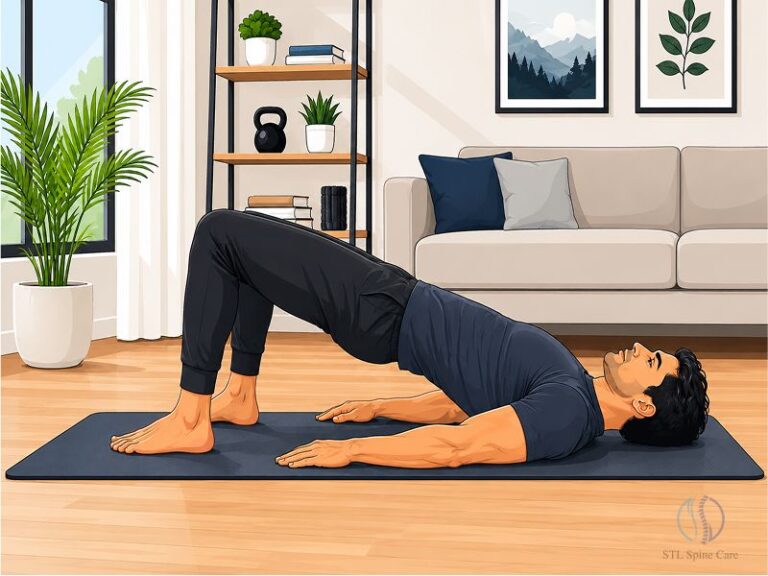
When your glutes aren’t doing their job, your lower back takes over. This overload increases pressure around the sciatic nerve. The bridge reverses that by reactivating the muscles in your glutes, giving your spine the support it’s been missing.
How to do it properly:
- Lie on your back, knees bent, feet hip-width apart
- Tighten your core first (don’t skip this)
- Press through your heels to lift your hips
- Pause at the top with a firm glute squeeze
- Hold it for 5–30 seconds → rest → repeat 2–3 times
Knee-to-Chest - Creating Space Where It’s Compressed
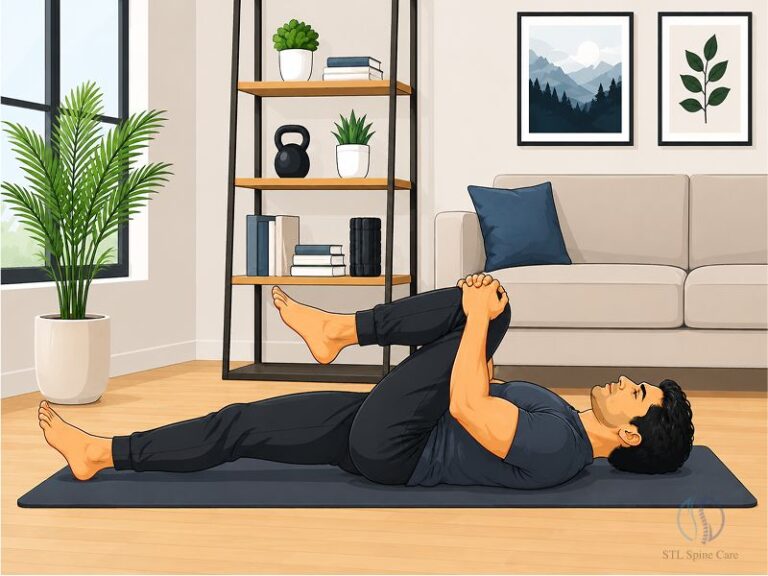
Sciatic irritation often begins where the lower spine is compressed. This movement gently opens that space without forcing the body, making it one of the safest starting points.
Stretch flow:
Start flat → bring one knee in slowly → support behind the knee → pull just until you feel a mild stretch
How to do it properly:
- Keep your lower back relaxed against the floor
- Avoid pulling aggressively; this is decompression, so don’t use a lot of force
- Hold: 10–30 seconds
- Switch sides
- Repeat 2–3 rounds per leg
Clamshell - Preventing the Pinch Pain in the Hip
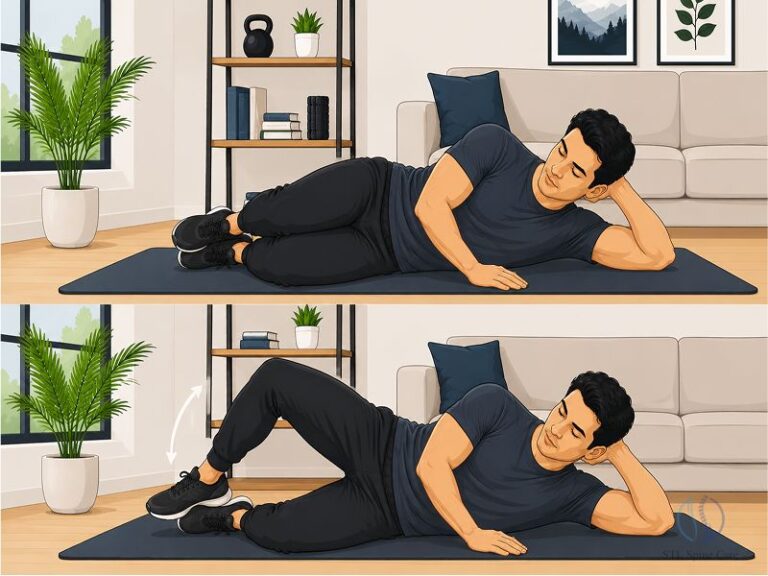
Sciatica isn’t always coming from the spine. Weak hip stabilizers can cause subtle shifts in movement that repeatedly irritate the nerve. The clamshell targets these small but critical muscles. A focused burn on the side of your hip, not in your lower back.
How to do it properly:
- Lie on your side, knees bent
- Keep feet stacked together
- Lift your top knee
- without rolling backward
Hold & repeat:
- Lift → hold 5–10 seconds → lower slowly
- 10–12 reps per side
Bird - Dog Stretch
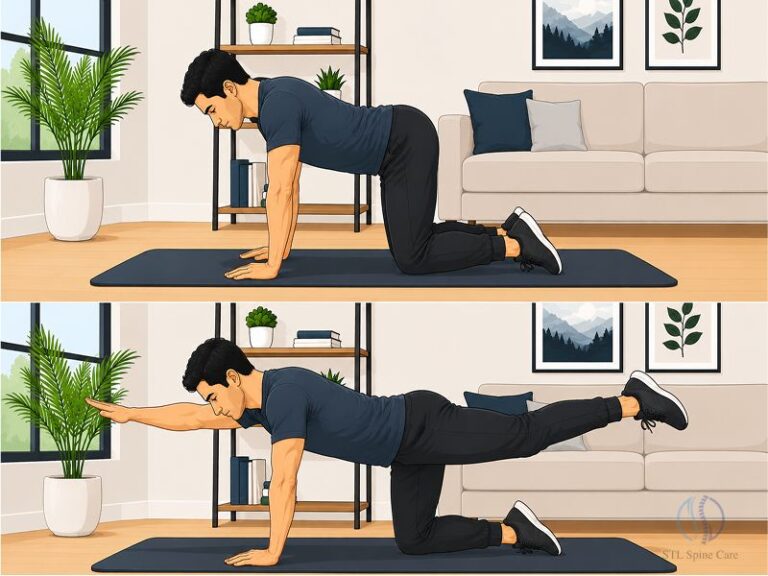
Pain often makes the spine unstable. The Bird-Dog retrains your body to move without losing alignment, which is key for long-term relief.
How to do it properly:
- Start on hands and knees
- Extend the opposite arm and leg
- Keep your spine completely still
- No dipping in the lower back, no rotation in the hips
- Hold each rep for 5 seconds, alternate sides
- Complete 10 slow reps
Cobra Stretch Reducing the Disc Pressure
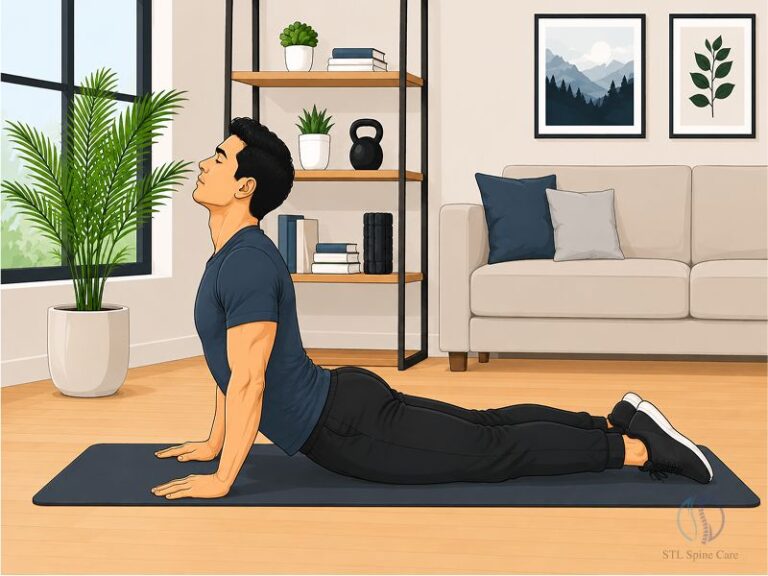
If your sciatica is linked to a herniated disc issue, this is one of the most important movements. It changes the direction of pressure inside the spine, helping move it away from the nerve.
How to do it properly
- Lie on your stomach
- Place hands under shoulders
- Press your chest upward slowly
- Keep hips grounded
- Go only as far as comfortable; range improves over time
- 20–30 seconds, repeat 5–10 times
Child’s Pose - Letting the Nervous System Reset
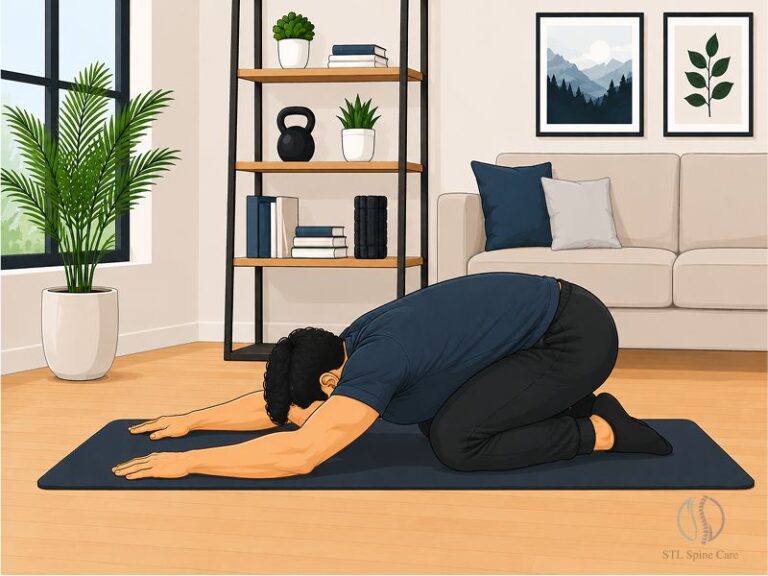
After activation and correction, your body needs to downshift. Sciatica often keeps the nervous system in a guarded state. This position helps release that tension.
How to do it properly:
- From all fours, sit back onto your heels
- Extend arms forward
- Rest your forehead down
- Let your hips carry your weight
- Breathe slowly and deeply
- Stay for 1–2 minutes (longer if comfortable)
What’s the best way to treat sciatica pain?
The best solution for sciatica pain relief is by combining movements that reduce pressure on the nerve with exercises that build support around your spine. While the 6 moves outlined above, like the Glute Bridge and Bird-Dog, provide the quick Resets your nerves need to breathe, true recovery happens when you align these movements with professional diagnostic insight.
So, when to seek professional care?
If your pain isn’t moving from your leg back toward your lower back or if you’re experiencing persistent numbness, home stretches may only be addressing the symptoms rather than the source.
In such cases, getting the right diagnosis can help you move from temporary relief to lasting recovery, and that’s where the team at STL Spine Care can guide you with a more precise approach.
Frequently Asked Questions
Should you stretch through sciatica pain or stop?
You should not push through sharp or spreading pain. If a stretch reduces intensity or moves pain closer to your back, continue. If it sends pain further down your leg, stop.
Why does sciatica pain feel better when you stand or walk?
Standing and walking reduce the constant pressure caused by sitting and allow your spine to return to a more natural position, easing nerve irritation.
How can you tell if sciatica is from a disc or a tight muscle?
Should you avoid exercise completely during a sciatica flare-up?
No, complete rest can make stiffness worse. The goal is to avoid painful movements and continue with controlled, targeted exercises.
What’s the biggest mistake people make with sciatica?
Doing random stretches without understanding direction, especially movements that increase nerve pressure, like forward bending.