

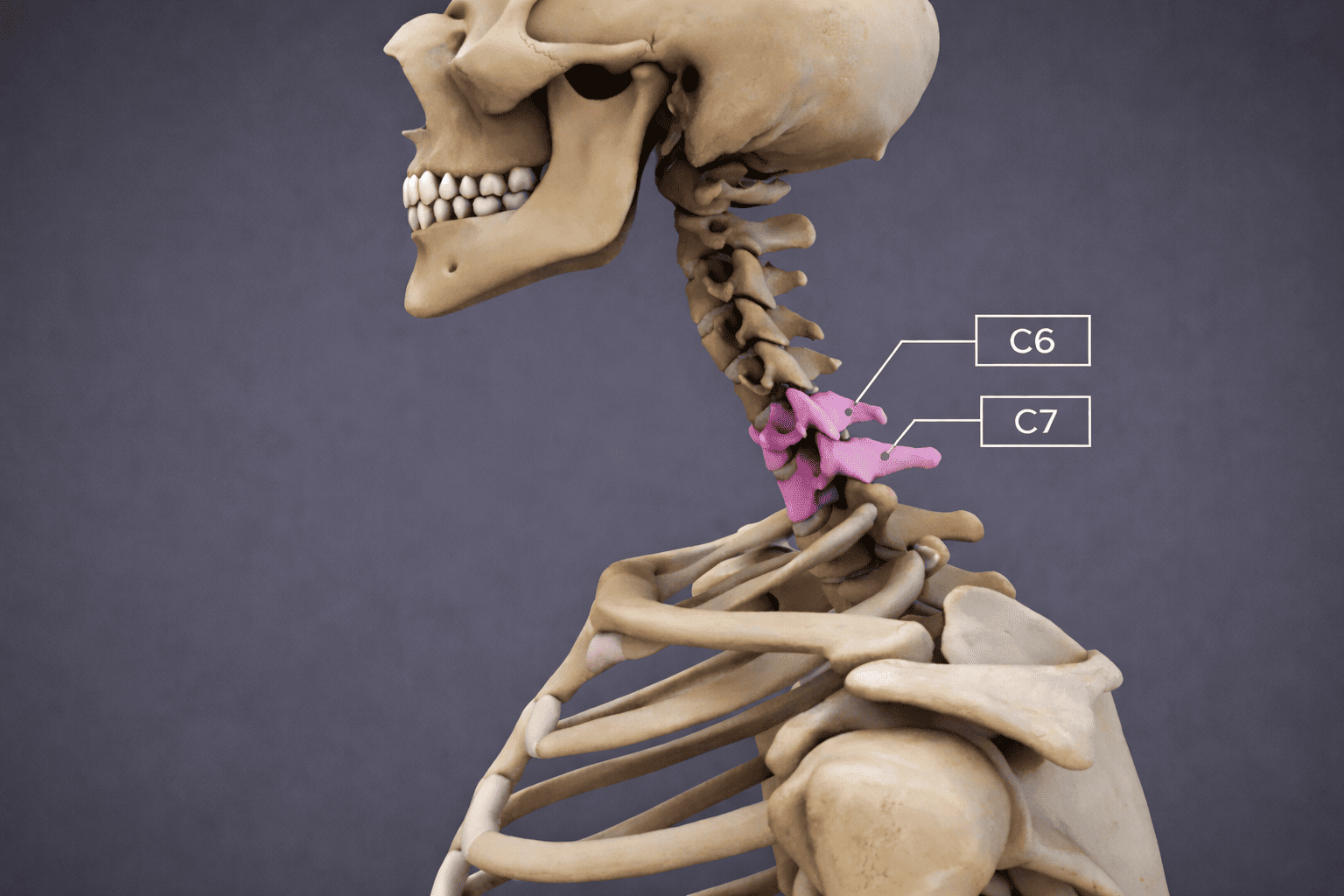
C6-C7 Disc Herniation: Causes, Symptoms, and Advanced Treatment
 John Coury, D.O
April 15, 2026
John Coury, D.O
April 15, 2026
It starts as a stiff neck, but within days, it’s a burning sensation traveling down your arm that no amount of ibuprofen seems to touch. If you feel like there’s a ‘pinched wire’ running from the base of your neck to your middle finger, you’re likely dealing with a C6-C7 disc herniation.
At this level of the spine, even a small disc bulge can irritate the C7 nerve and create very specific changes like arm pain, middle finger numbness from the neck, or subtle triceps muscle weakness.
Before jumping to conclusions, it’s important to understand exactly how this level of the spine influences everything you’re feeling and what this diagnosis really means.
What Happens If the C7 Nerve Is Compressed?
If the C7 nerve is compressed, it can cause pain that travels from the lower neck into the shoulder, down the back of the arm, and into the middle finger. Many people notice tingling, numbness in the middle finger, or weakness when straightening the elbow due to triceps involvement. This pattern is commonly associated with C6–C7 nerve root compression and is a form of cervical radiculopathy.
What Exactly Is a C6-C7 Disc Herniation?
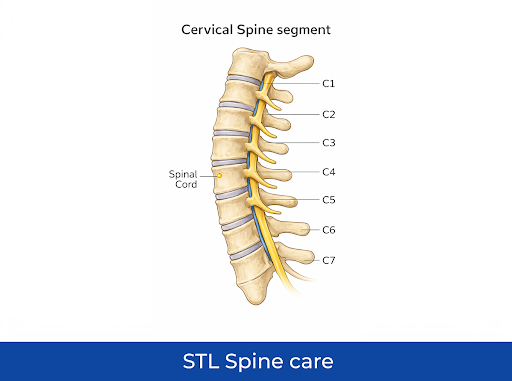
Your neck is made up of small bones called vertebrae, separated by soft discs that act like cushions. The C6-C7 disc sits in the lower part of your neck.
At the C6–C7 level, that disc sits very close to the C7 nerve root. When the outer layer of the disc weakens or tears, some of the inner material can push outward. This is what’s known as a C6-C7 disc herniation.
When that nerve gets irritated or compressed, the initial neck pain doesn’t just stay in one place; it can travel down your shoulder, arm, and even into your middle finger.
C6-C7 Herniation Symptoms Linked to C7 Nerve Compression
There’s a little stiffness at the base of your neck that doesn’t seem unusual. Later, you notice a dull ache settling into the back of your shoulder. Over the next few days, that discomfort starts to drift down the arm, into the forearm, and sometimes into the middle finger with a faint tingling you can’t quite ignore.
These are common C6-C7 herniation symptoms linked to C7 nerve compression. The discomfort doesn’t scatter randomly; it follows a consistent path.
Neck Pain Radiating To The Arm
This usually doesn’t feel like a sore muscle you can stretch out. It’s sharper, sometimes described as burning, zapping, or like a thin line of heat traveling from the lower neck, across the back of the shoulder, and down the arm. The key detail is that it moves. Pain that follows that path is a common sign of C7 nerve irritation linked to a C6–C7 disc issue.
Middle Finger Numbness From The Neck
Triceps Muscle Weakness and Grip Changes
The C7 nerve also powers the triceps, the muscle that helps you straighten your elbow and push things away. You might notice small changes before obvious weakness: pushing up from a chair feels harder, a push-up feels uneven, or your grip seems less steady when holding a pen or steering wheel. It’s not dramatic, but it’s different enough to notice.
Warning Signs of Severe Cervical Radiculopathy
Most cases of cervical radiculopathy develop gradually and can be addressed with proper evaluation and care. However, certain symptoms should never be ignored. Seek urgent medical attention if you experience:
- Loss of bladder or bowel control
- Sudden & significant weakness in both arms
- Difficulty in balancing or walking
C6-C7 Disc Herniation Treatment Options
Conservative Care for Nerve Compression
Treatment often starts with structured conservative care. This includes relative rest (avoiding strain, not complete bed rest), short-term use of nonsteroidal anti-inflammatory drugs (NSAIDs) like ibuprofen (as directed by your provider) to reduce inflammation, and the use of heat or ice for muscle tension.
Physical therapy plays a key role, focusing on posture correction, guided exercises, and sometimes cervical traction to gently create space between vertebrae and ease pressure on the C7 nerve.
If pain persists, an epidural steroid injection may be used to deliver anti-inflammatory medication directly around the irritated nerve root, helping reduce swelling and discomfort while the disc stabilizes.
Minimally Invasive Disc Procedure
If symptoms continue despite therapy, minimally invasive options may be considered. Spinal decompression therapy uses controlled traction to reduce pressure within the disc and relieve nerve irritation.
In select cases, an endoscopic laser disc procedure can be performed through a small incision to remove or shrink the portion of disc material pressing on the nerve.
Surgical Options for Advanced Cervical Disc Herniation
When significant weakness develops or symptoms do not improve after several months, surgery may be recommended. Anterior Cervical Discectomy and Fusion (ACDF) involves removing the damaged disc through the front of the neck and stabilizing the segment by fusing the adjacent vertebrae.
Cervical disc replacement is another option that removes the diseased disc but preserves motion with an artificial implant. In certain cases, a posterior cervical foraminotomy can be performed from the back of the neck to create more space for the compressed nerve without fusion.
The most appropriate approach depends on symptom severity, imaging findings, and long-term spine health goals.
C5-C6 vs C6-C7 Herniation: What’s the Difference?
Neck disc herniations don’t all behave the same way, even when they’re just one level apart. A C5–C6 herniation and a C6–C7 herniation can cause similar neck pain, but the symptoms they send down the arm often follow different paths.
The difference comes down to which nerve root is affected, and that small anatomical detail can completely change where you feel pain, numbness, or weakness.
Conclusion
That creeping ache that starts in your neck and lands in your arm is a subtle warning sign. It’s the nerve signaling that something is off in your neck; ignoring it disrupts sleep, work, or even simple daily tasks. Take note of when it flares, adjust your movements, and let STL Spine Care tailor the right treatment so each day feels less restricted.
Our focus isn’t just on calming the pain; it’s on identifying exactly which level is involved, how the C7 nerve is being affected, and what that means for you long term.
Frequently Asked Questions
Can a C6-C7 herniated disc cause weakness in my arm or grip?
Yes, the C7 nerve controls the triceps, which helps straighten the elbow. Compression can make pushing, lifting, or gripping objects feel weaker or awkward.
When is a cervical nerve compression serious?
Seek urgent attention if you notice sudden weakness in both arms, difficulty walking or balancing, or loss of bladder/bowel control. These signs indicate severe nerve or spinal cord involvement.
How long does recovery take from C6-C7 herniation treatment?
Recovery depends on the treatment. Conservative care usually helps in 4–6 weeks, minimally invasive procedures let most people resume activities in days to weeks, and surgery like ACDF typically takes 3–6 months for full recovery.
Can posture or work habits make a C6-C7 herniation worse?
At STL SpineCare, we help patients reduce the impact of posture and work habits on a C6-C7 herniation. Through personalized ergonomic guidance, posture training, and targeted exercises, we teach strategies to ease disc stress and protect the C7 nerve from further compression.
How soon should I see a doctor after noticing arm pain or numbness?
It’s best to get assessed promptly. Early evaluation prevents worsening nerve compression and helps plan treatment before daily activities are significantly affected.
Can C6-C7 nerve root compression heal without surgery?
Many cases can improve with conservative treatments such as physical therapy, activity modification, medication, and other non-surgical approaches. Treatment recommendations depend on the underlying cause and severity.