

Herniated Disc vs Bulging Disc: What’s the Real Difference
 John Coury, D.O
April 9, 2026
John Coury, D.O
April 9, 2026
If your MRI report mentions a bulging or herniated disc, it’s natural to feel a jolt of worry. While the terminology may seem concerning, these spinal conditions are widely seen in clinical practice and are typically manageable with the right treatment approach.
Spinal discs are the soft cushions between your vertebrae that act like shock absorbers for your back. When they start to bulge or herniate, they may press on nerves, causing discomfort, tingling, or even sharp pain.
But the severity of your symptoms doesn’t always match what shows up on imaging. Knowing whether you have a bulging disc or a herniated disc matters because they are not the same.
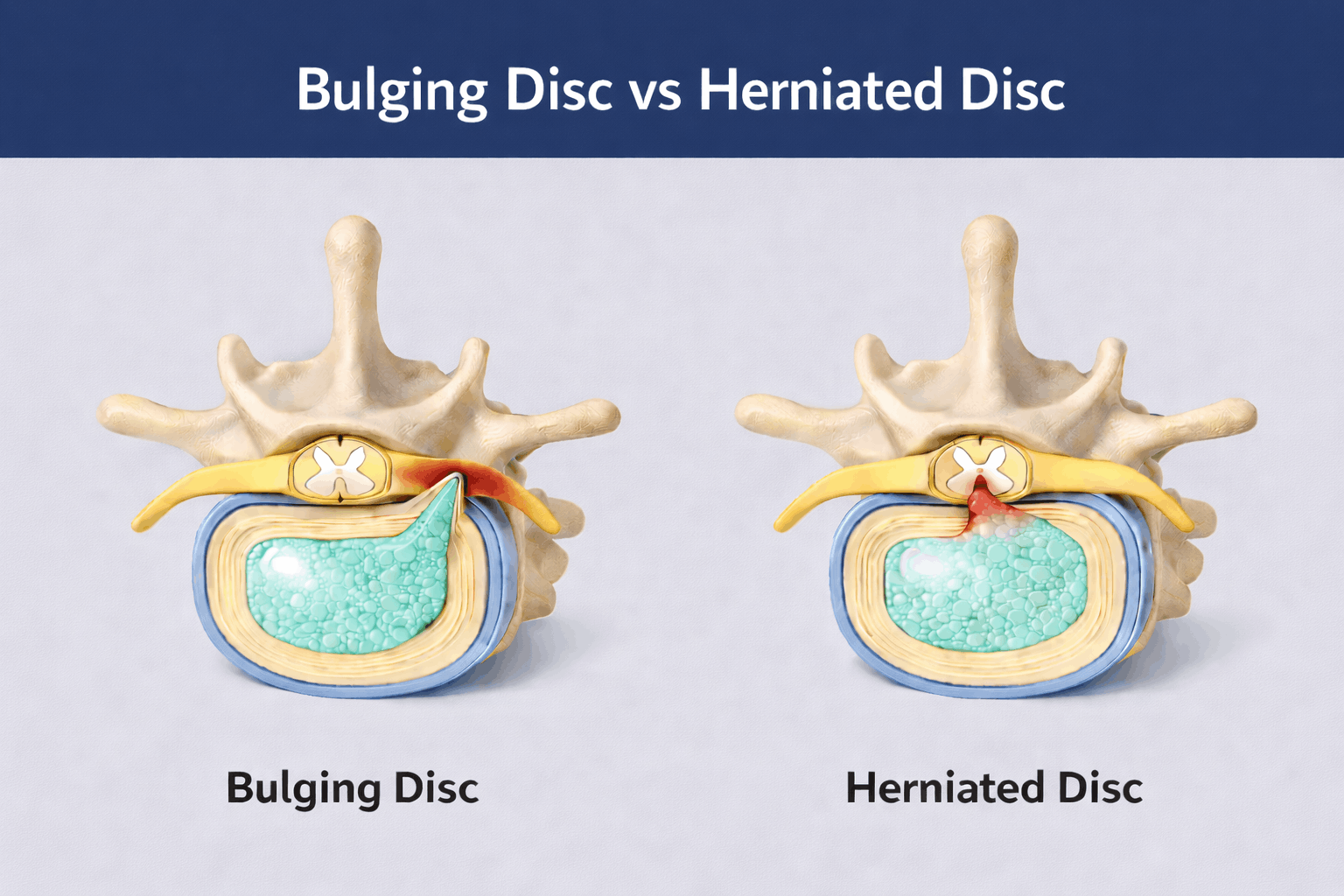
A bulging disc means the outer layer of the disc is pushed outward but still intact. A herniated disc means the inner material has broken through the outer layer and may irritate nearby nerves. If you’re trying to understand herniated disc vs bulging disc, this breakdown will help you make sense of your diagnosis and next steps.
What Are Spinal Discs Made Of?
Your spinal discs are like tiny jelly donuts nestled between your vertebrae. Each disc has two main components:
- Annulus Fibrosus – the tough, rubbery exterior that keeps the disc in shape
- Nucleus Pulposus – the soft, jelly-like center that absorbs shocks
When these discs are healthy, they cushion your spine, allow smooth movement, and protect nerves from excessive pressure. Symptoms can be seen when a disc starts to bulge or rupture.
Herniated Disc: The “Rupture” Phase
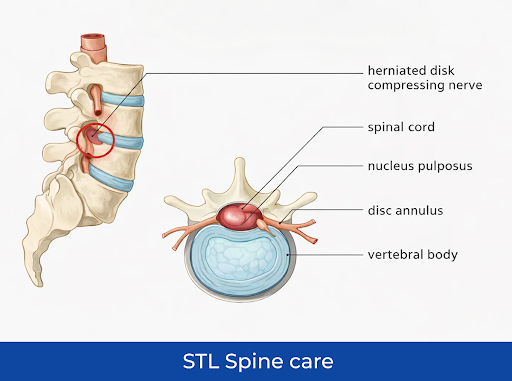
A herniated disc occurs when a tear develops in the tough outer layer, allowing the inner jelly-like material to leak out.
Think of biting into a jelly donut and the filling oozing out; this is similar to what happens inside your spine. Herniated disc symptoms are more likely to be sharp or radiating pain.
Why it matters:
- The leaked inner core contains chemical irritants that can inflame nearby nerves, making it more painful than a simple bulge.
- It often protrudes further into the spinal canal, potentially causing sharp pain, numbness, or weakness.
Common causes:
- Heavy lifting or improper lifting techniques
- Acute strain from sports or accidents
Bulging Disc: The “Pushed Out” Phase
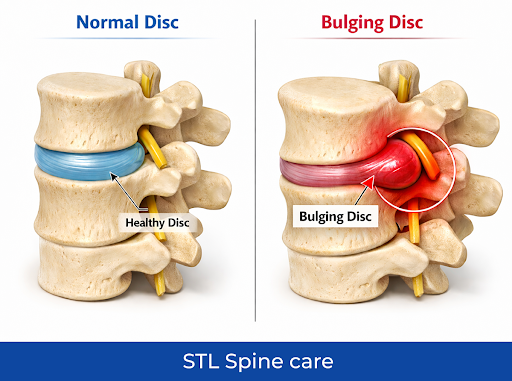
A bulging disc happens when the disc begins to push outward beyond its normal space, but the outer layer remains intact.
Imagine pressing down on a balloon; it spreads outward but doesn’t pop. Similarly, the disc protrudes but stays whole. Bulging disc symptoms usually develop gradually and may feel like a dull ache rather than sharp nerve pain.
Why it matters:
- Because the disc covers a wider area, it may touch multiple nerve roots at once.
- Symptoms can range from mild discomfort to numbness, though some people feel nothing at all.
Common causes:
- Gradual wear and tear from aging
- Degenerative disc disease
- Poor posture or repetitive strain
Differences between a Bulging Disc and a Herniated Disc
| Bulging Disc Signs | Herniated Disc Signs |
|---|---|
| Pain feels dull and stays in the lower back or neck | Pain is sharp, burning, or electric and travels down a leg or arm |
| Symptoms developed slowly over time | Symptoms started suddenly after lifting, twisting, or straining |
| Discomfort spreads across a broader area of the back | Pain follows a specific nerve path (like the back of the leg or into one finger) |
| Stiffness is worse in the morning and improves with movement | Pain worsens with coughing, sneezing, or sudden movements |
| Mild tingling or numbness occasionally in different areas | Tingling, numbness, or “pins and needles” affects one specific area |
| Pain increases after sitting or slouching for long periods | Muscle weakness makes walking, standing, or gripping difficult |
| Feels tight or pressured rather than intense | In severe cases, there may be loss of reflexes |
| Posture-related discomfort, especially after slouching or lifting light objects | Rare but serious: it may cause bladder or bowel changes (medical emergency) |
Why Knowing The Difference is Important
Your body cares more about symptoms than labels. You might have a bulging disc and feel nothing, or a tiny herniation could trigger sciatica, sharp pain down the leg if it presses on a nerve.
Bulging disc treatment and herniated disc treatment often begin with the same conservative steps
Doctors usually focus on managing symptoms first:
- Physical therapy to strengthen muscles and relieve pressure
- Anti-inflammatory medications to reduce swelling and pain
- Lifestyle adjustments like posture correction and safe lifting techniques
Surgery is often a last resort, reserved for cases where conservative treatments fail or when serious complications arise.
Disc Injury Recovery Plan for Bulging and Herniated Discs
Recovering from a bulging or herniated disc can feel overwhelming, but breaking it down into clear, manageable phases makes it easier and more empowering. Here’s a simple roadmap you can follow:
Phase 1: Reducing Pain and Inflammation
Recovery from a disc injury differs from general back pain. For the first few days, focus on reducing pain and inflammation so your body can start healing.
- Pain Relief: Consider anti-inflammatory medications (consult your doctor) to help reduce swelling.
- Ice/Heat Therapy: Use ice packs for the first 48–72 hours to reduce inflammation; switch to heat afterward to relax tense muscles
- Comfortable Positions: Lie down in positions that relieve pressure on your spine, like on your back with a pillow under your knees or on your side with a pillow between your legs.
- Avoid Aggravating Movements: Don’t lift heavy objects or twist suddenly. Small, gentle movements are safer at this stage.
Phase 2: Restoring Mobility and Strength
Once the initial pain eases, the focus shifts to regaining movement and flexibility.
- Gentle Exercises: Light stretches and nerve-gliding exercises improve circulation and reduce stiffness.
- Core Strengthening: Strengthening abdominal and lower back muscles helps support the spine naturally.
- Controlled Movements: Avoid jerky or heavy movements. Start slowly and gradually increase the range of motion.
- Posture Awareness: Pay attention to how you sit, stand, and lift even small objects: this reduces stress on the discs.
Herniated disc recovery improves significantly once inflammation decreases and nerve pressure is reduced.
Phase 3: Protecting Your Spine Long-term
- Ergonomic Adjustments: Use lumbar support in chairs, adjust your desk or monitor height, and consider a standing desk if possible.
- Core and Back Workouts: Continue exercises that strengthen the core and back muscles to support spinal alignment.
- Lifestyle Changes: Maintain a healthy weight, stay active, and avoid prolonged sitting or repetitive strain.
Conclusion
Knowing the difference between a bulging disc and a herniated disc is the first step toward effective recovery and long-term spine health. A bulge means the disc is pushed outward, while a herniation happens when the inside breaks through the outer layer; both conditions are highly manageable with proper care.
At STL Spine Care, our specialists provide personalized assessments, advanced treatment options, and ongoing guidance to help you recover safely and maintain a healthy spine.
Frequently Asked Questions
Can sitting too long cause a bulging or herniated disc?
Does age affect the risk of disc problems?
Disc degeneration is common with age, making bulging discs more likely after your 30s or 40s.
Can exercise make a herniated disc worse?
Are herniated discs hereditary?
There’s some genetic influence. If family members have chronic back problems, you may be more susceptible to disc issues.