


What to Expect Before, During, and After Spinal Decompression Surgery
 John Coury, D.O
January 5, 2026
John Coury, D.O
January 5, 2026
Most of us could feel a little anxious when we hear the word “surgery,” and spinal decompression surgery is no exception. The uncertainty we go through can make us feel overwhelmed.
Meet Xander. While Xander is a fictionalised character, his journey represents the real-life experiences and recovery paths of many professionals we treat here at STL Spine Care. He’s a 45 year old whose career and hobbies are around a computer screen. Within a few years, a dull ache in his lower back radiated down his leg, sciatica that made sitting through a meeting or standing in line at the grocery store unbearable. Since his spine condition is on par with all the non-surgical treatments, we recommended spinal decompression surgery.
If you find yourself in Xander’s shoes, planning for a surgery can be hard. Let’s go through the roadmap of this surgical journey ahead.
Pre-Op Phase: Preparing for a New Chapter
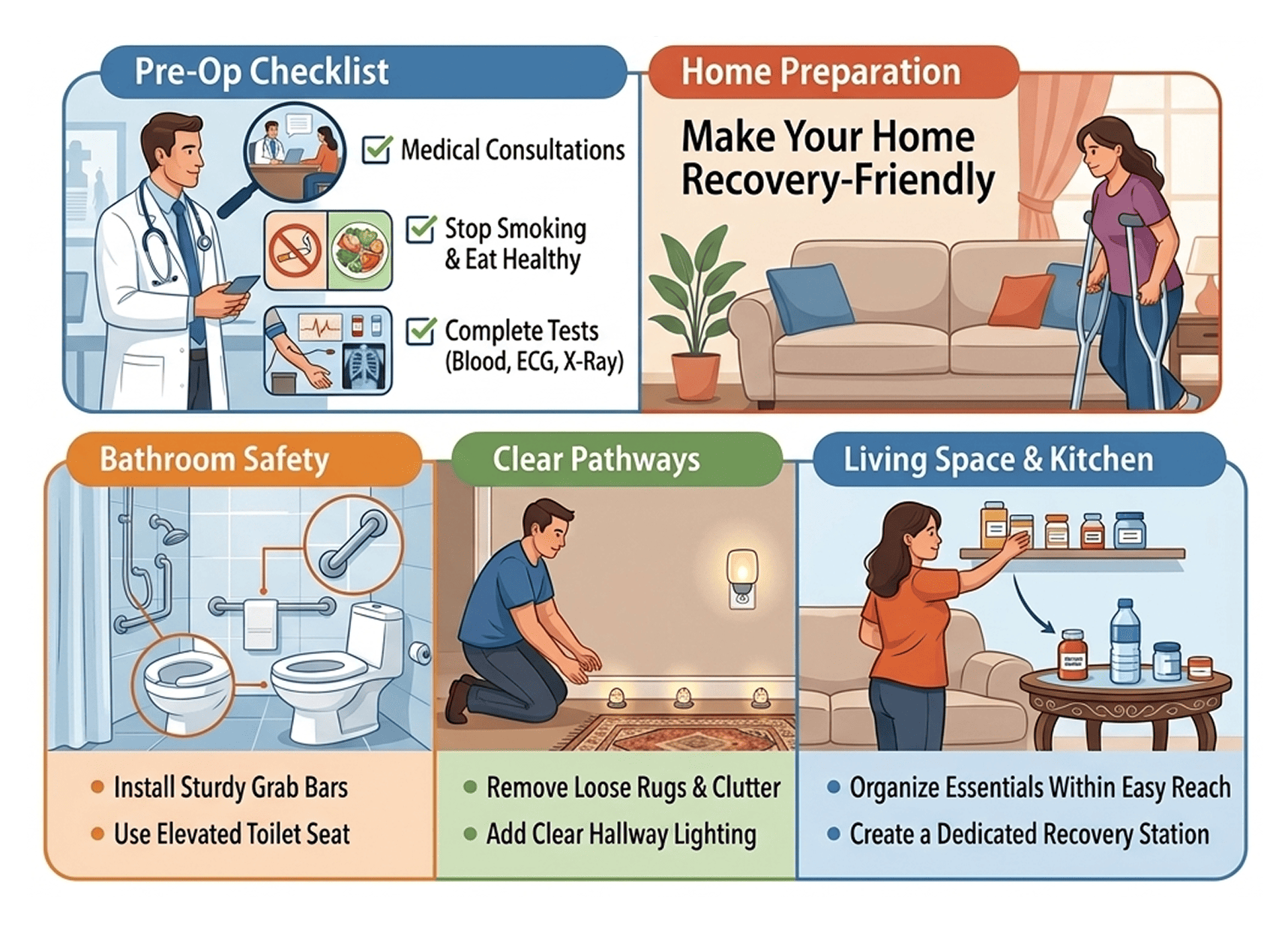
The Checklist: How to Prepare for Spinal Decompression Surgery
- Attend consultations to check your exercises, medications, and clearances from specialists like cardiology and others related to your condition.
- Stop smoking 4-6 weeks ahead, and get a good diet with high fiber and protein.
- Complete required tests: Blood test, imaging, ECG, and confirm allergies with your surgeon.
More than these, preparation is also mental. At STL Spine Care, we emphasise realistic expectations. Xander was informed that the nerve pain would disappear after surgery, but the body still needs time to heal from the surgery.
How can I change my home so it is easier to get around and do things?
Small modifications in your place to avoid bending, twisting, and fall risks can improve safe mobility during the recovery process.
- Have a Clear Pathway:
- Remove throw rugs, cords, and clutter from floors to prevent trips, especially with limited balance.
- Install night-lights near the bed, bathroom, and stairs for safe nighttime navigation.
- Bathroom Adaptations:
- Add grab bars near the toilet and shower.
- A raised toilet seat and a non-slip shower chair or mat can be helpful.
- Keep toiletries at waist height to eliminate reaching or bending.
- Living Setup:
- Move your bed to the main floor to skip stairs.
- Position furniture for a wide walkway and use a firm mattress with supportive pillows.
- Place regular essentials like remotes, phones, chargers, and medications at waist level.
- Kitchen and General Aids:
- Stock easy preparation meals and keep the dishes within your reach.
- Arrange a single recovery station with a comfortable chair, lumbar support, and loose clothing nearby.
Procedure Day: What Happens Inside the Operating Room
Anesthesia and the Decompression Process
Once Xander was ready, he was placed under general anesthesia. During the surgery, the surgeon performs an essential upgrade for the spine. The goal is to remove the specific bone or disc material that is compressing the spinal nerves.
Why Choosing the Surgical Team at STL Spine Care Matters for Your Spine Health
The First 48 Hours After The Surgery
Xander’s experience in the recovery room was the first step toward his new normal.
Managing Pain and Nerve Sensations Immediately After Spine Surgery
When he woke up, the sciatica he had lived with for years was noticeably different. However, he did have localized soreness. We worked to manage this through a scheduled pain protocol.
Safe Mobility Tips: When Can I Walk After Spinal Decompression?
- Log Roll Technique: Lie on your side, hold a pillow against your chest, then swing your legs off the bed while pushing up with your arms.
- Short Bursts Walking: Start with short 5 to 10 minute walks every hour rather than longer sessions. Use a walker for stability and rest if pain
- Posture Focus: Stand tall with your spine straight and shoulders back. Gently look forward to keeping your body properly aligned as you move.
- Brace Usage: Wear your prescribed brace during early walks for added support. Your physical therapist will guide you on when to reduce its use.
- Ankle Pumps: Practice ankle pumps 10 to 20 times each hour while sitting or lying down, simply flex and point your feet.
- No Twisting: Always turn by pivoting both feet together, never twisting at the waist.
Recovery and Returning to the Screen
So when you can get back to your work without the long, disturbing suffering.
Typical Recovery Timeline for Spinal Decompression Patients: 6-Week Milestone
By the end of the second week, Xander was taking short, gentle walks around his neighborhood. By week five, he was feeling significantly more energetic.
This is very challenging, particularly the No BLT rule (No Bending, Lifting, or Twisting) is gradually relaxed, and patients can begin more structured physical therapy to rebuild core strength.
How to Set Up an Ergonomic Desk After Back Surgery
- 90-90-90 Rule: Sit with your elbows, hips, and knees each bent at 90 degrees. Keep your feet flat on the floor or use a footrest to prevent lower back strain.
- Monitor at Eye Level: Position the top third of your screen at eye level to avoid leaning your head forward. Use a laptop stand with an external keyboard if needed.
- Swivel, Don’t Twist: Never twist your spine to reach items. Use a swivel chair to turn your whole body as one unit, keeping your shoulders and hips aligned.
- Move Every 30 Minutes: Stand up, stretch, or take a short walk every half hour. Staying in one position too long compresses your spine and slows healing.
Conclusion
Xander’s journey from debilitating sciatica to returning to his desk pain-free didn’t happen overnight, but with proper preparation, a skilled surgical team, and disciplined recovery habits, he got there.
If you’re facing any discomfort due to your spine issue and exploring the spinal stenosis treatment options for ongoing back or leg pain, having the right guidance matters. STL Spine Care gets you personalized treatment plans, clear communication, and long-term recovery. Having a consultation can help you understand your options and take the next step with confidence.
Frequently Asked Questions
What else can be done to relieve my symptoms besides surgery?
Physical therapy, injections, medications, and lifestyle modifications often provide relief. We exhaust conservative options first before recommending surgery.
Will my condition become worse if I do not have the surgery?
That depends on your specific diagnosis. Some conditions stabilize or improve with conservative care, while others progressively worsen. We’ll discuss your situation candidly during the consultation.
Does insurance cover all of the costs or just some of them?
Most plans cover a portion. You’ll be responsible for your deductible and co-insurance at registration. Sometimes additional costs arise if the procedure requires more than anticipated.
What can I do before surgery to lower the risks?
Stop smoking immediately. Maintain a healthy weight. Follow all pre-op instructions precisely. Arrange help at home for recovery. These steps directly impact your outcome.
What type of anesthesia will be used? Are there choices to consider?
Your anesthesiologist will determine the safest option based on your procedure and medical history. This is discussed during your pre-op assessment at the center.